Habit Tracker vs Goal Planner: How to Tell Whether You Need to Build a Habit or Finish a Goal
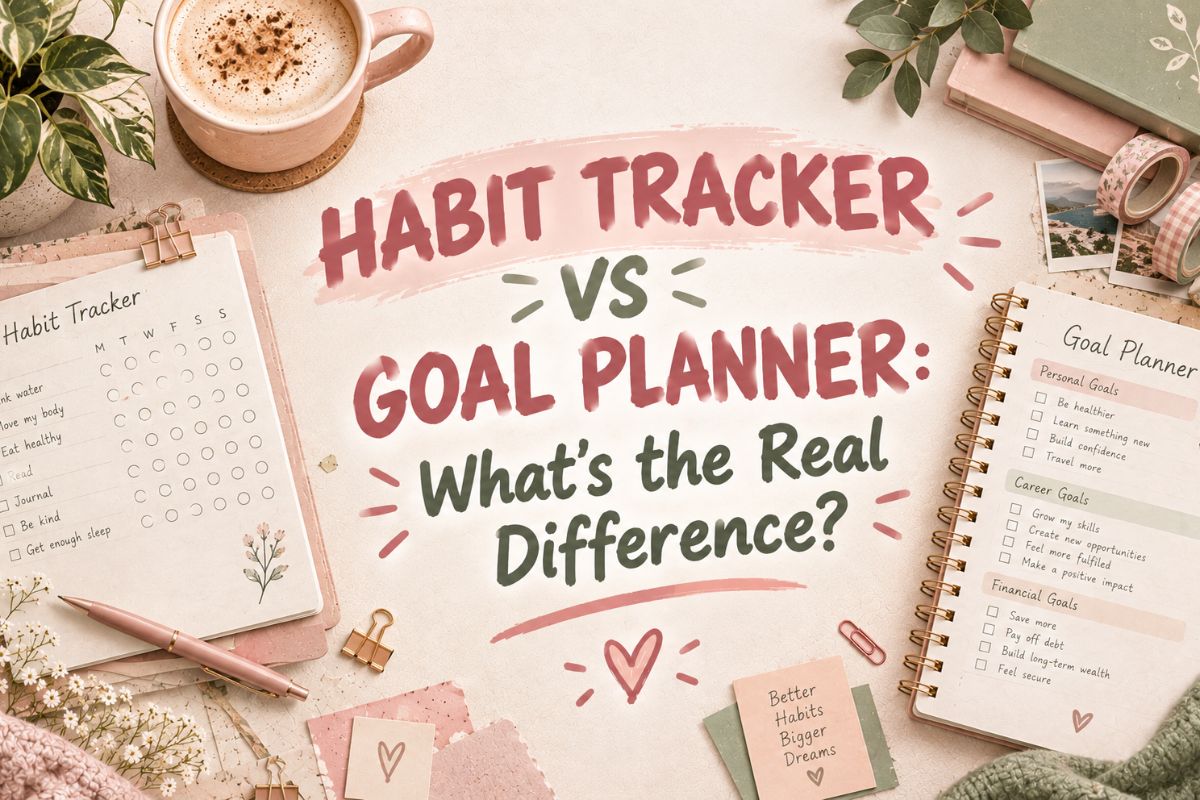
Habit tracker vs goal planner — these get lumped together so often that it’s easy to assume they’re basically the same thing with different names. They’re not. They’re built to answer two different questions — one is about consistency, the other is about direction — and using the wrong one for what you actually need is a common reason planning systems get abandoned after a few weeks.
Habit Tracker vs Goal Planner: The Core Difference
A habit tracker answers one question: did you do the thing today? It’s built around repetition — the same small action, checked off day after day, with the value coming from consistency itself rather than any single day’s result. Drinking enough water, going for a walk, reading for ten minutes — habit trackers work best when the action is small, repeatable, and doesn’t really change from one day to the next.
A goal planner answers a different question: what are you actually working toward, and how are you getting there? It’s built around an outcome — something with a defined finish line, even if that finish line is months or years away. Running a marathon, saving a specific amount of money, launching a business — goals usually need steps, deadlines, and a plan that changes as you get closer to the result.
The simplest way to tell them apart: a habit is something you do forever (or at least indefinitely), and a goal is something you eventually finish. “Exercise more” is a habit. “Run a half marathon in October” is a goal that a habit — like tracking your training runs — might support along the way.
When a Habit Tracker Is What You Actually Need
Reach for a habit tracker when the thing you’re trying to build doesn’t have a natural end point. You’re not trying to hit a number and stop — you’re trying to make something a normal part of your life, the way brushing your teeth doesn’t require a plan anymore because it’s just what you do.
- You want to build consistency around something small and repeatable, not hit a specific milestone.
- The action itself doesn’t really change — it’s the same task, done regularly, rather than a series of different steps.
- You care more about the streak than the outcome of any single day.
- You’ve tried to “just remember” to do something and it kept slipping — a visual, daily check-in tends to fix that better than willpower alone.
If that sounds like what you’re after, we’ve rounded up a full set of habit trackers — free options, digital formats, themed designs, and more — sorted by what they’re best for.
A Good Starting Point
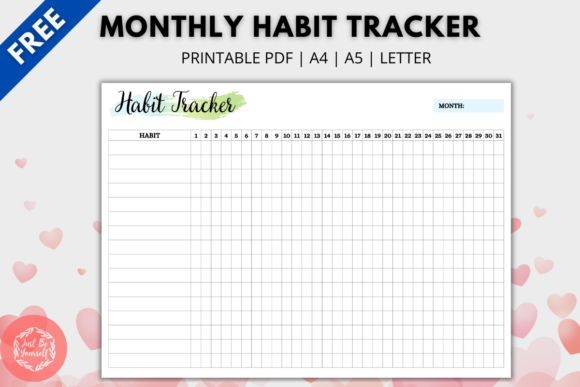
This free monthly tracker is a genuinely solid place to start — a clean grid you can print today, with zero cost involved in testing whether tracking a habit actually works for you before committing to anything more elaborate.
When a Goal Planner Is What You Actually Need
Reach for a goal planner when you’re working toward something specific enough that you could eventually say “I did it” and mean it’s actually finished. Goals have a shape — a starting point, a series of steps, and a result — that a habit tracker’s daily grid isn’t really built to hold.
- You have a specific outcome in mind, not just a behavior you want to repeat.
- Getting there involves different steps at different times, rather than the same action every day.
- There’s a real deadline or timeframe attached, even a loose one.
- You need to break something big and slightly overwhelming into smaller, more manageable pieces.
If that’s closer to what you’re working on, we’ve rounded up a full set of goal planners — Canva templates, free options, timeframe-specific formats, and comprehensive all-in-one systems — sorted by what they’re best for.
A Good Starting Point
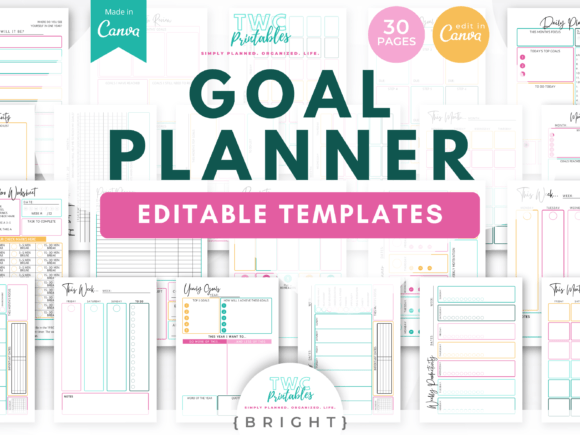
This editable Canva template covers the full range of goal-setting basics with a bold, motivating color palette rather than something clinical — a dependable pick if you want structure without it feeling like a spreadsheet.
Do You Actually Need Both?
Often, yes — and not as two separate, competing systems, but as two tools that support each other. A goal planner sets the direction. A habit tracker handles the part of getting there that depends on showing up consistently, day after day, whether you feel like it or not.
Take the marathon example again: the goal planner holds the training schedule, the race date, and the milestones along the way — 5K, 10K, half marathon distance, building up week by week. The habit tracker holds something much smaller and more repetitive sitting underneath that goal, like “did I run today” or “did I stretch,” checked off regardless of which specific workout was on the schedule.
Used this way, they’re not really competing for the same job. The goal planner is the map. The habit tracker is what keeps you walking it on the days the destination still feels far away.
Final Thoughts
If you’re not sure which one you need, start with the question itself: are you trying to build a habit, or finish a goal? The answer usually makes the choice obvious. And if the honest answer is “both,” that’s not a sign you’re overcomplicating things — it just means your goal is big enough to need daily consistency behind it, and a single tool was never going to cover the whole job anyway.
You May Also Like
This post contains affiliate links. If you buy through them, we may earn a small commission at no extra cost to you. Learn more.