Vision Board vs Mood Board: How to Choose the One That Matches What You’re Actually Trying to Create
Both are collages of images and words. Both get pinned up where you’ll see them daily. And on Pinterest, the two terms get used almost interchangeably. But a vision board and a mood board are built to do genuinely different jobs, and picking the wrong one means you end up with something that looks nice but doesn’t actually do what you needed.
Quick navigation
Table of Contents
Vision Board vs Mood Board: The Quick Answer
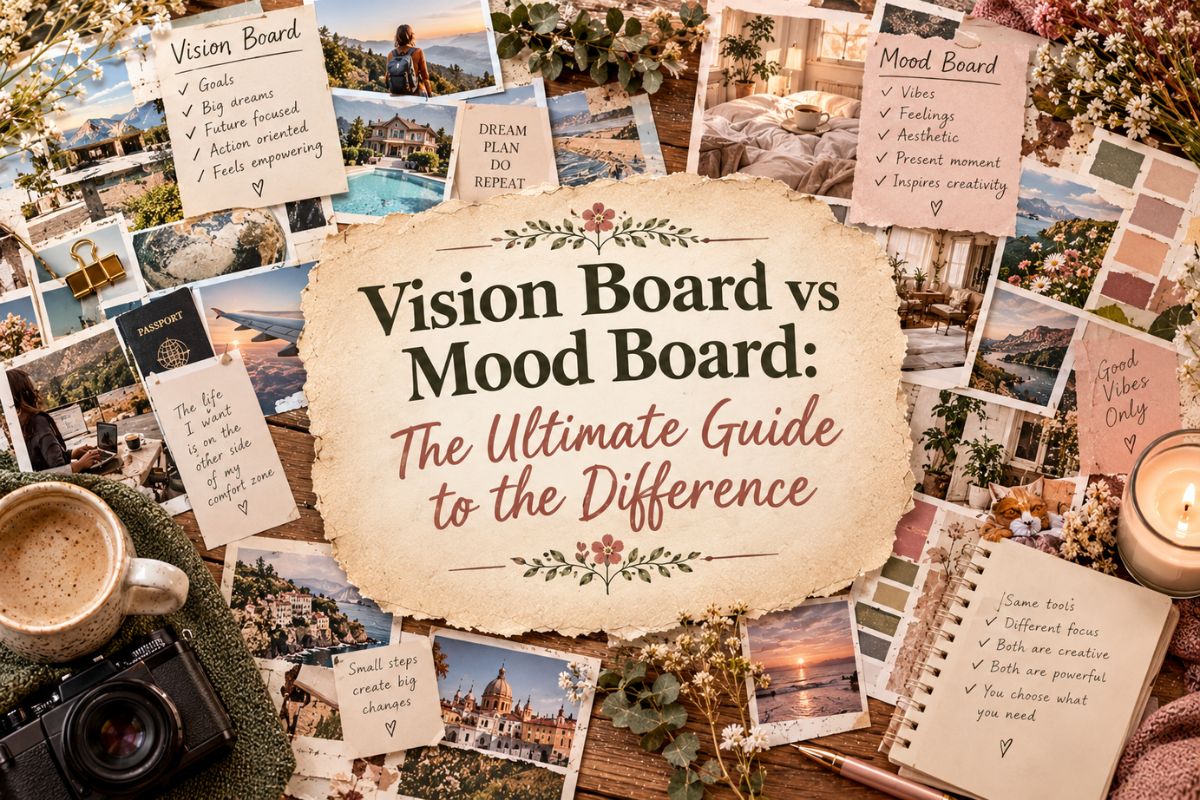
One is about direction — it represents specific goals and the future you’re working toward, usually paired with dates, milestones, or affirmations. The other is about feeling — it captures a look, atmosphere, or aesthetic you want to surround yourself with right now, without necessarily tying it to a goal at all. If you’re working toward something specific, build the goal-oriented version. If you’re chasing a vibe or a visual direction, the aesthetic-focused one fits better.
| Vision Board | Mood Board | |
|---|---|---|
| Focus | Future goals and direction | Present feeling and aesthetic |
| Typical content | Goals, milestones, affirmations | Colors, textures, imagery, tone |
| Tied to manifestation? | Often, yes | Rarely — it’s more about design |
| Common use | New Year goals, personal growth | Interior design, style, branding |
What Is a Vision Board?
This is a visual collage built around where you want your life to go — the goals, milestones, and experiences you’re actively working toward. It usually includes concrete markers of progress: a dollar figure, a date, a specific achievement, sometimes paired with affirmations meant to be read daily rather than just looked at.
Because it’s tied to manifestation and goal-setting for a lot of people, a vision board tends to get refreshed on a schedule — a new one for the new year, or updated sections as goals shift. The point isn’t just to look at pretty images; it’s repeated exposure to a specific direction you’re trying to move in.
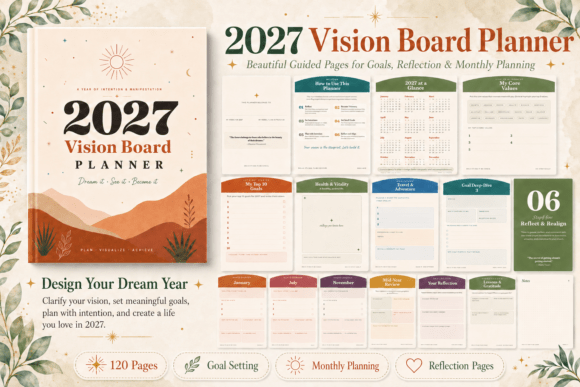
An example of what this looks like in practice: the 2027 Vision Board Planner below pairs the collage itself with monthly affirmations, a full year habit tracker, and quarterly “Reflect & Realign” check-ins — real accountability built in, not just a one-time board.
What Is a Mood Board?
This one captures a feeling, atmosphere, or aesthetic rather than a specific goal. Designers, decorators, and creatives use them constantly to nail down a look before committing to it — colors, textures, and imagery that communicate a vibe rather than a milestone. On a personal level, a mood board might represent the version of yourself you want to embody right now, rather than an outcome you’re waiting to reach.
Unlike a vision board, a mood board doesn’t ask anything of you beyond the aesthetic itself — there’s no date attached, no milestone to hit. It’s less about the destination and more about how you want things to look and feel along the way.
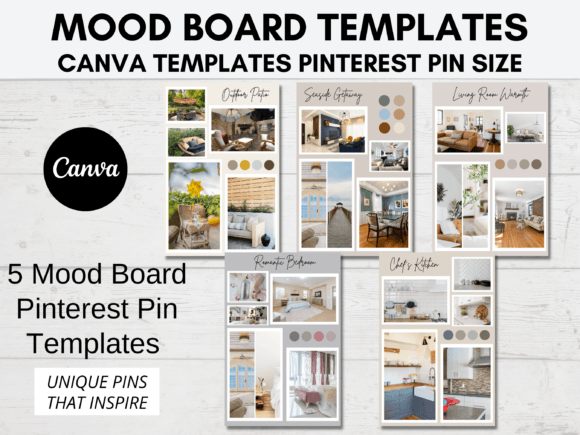
An example of what this looks like in practice: the Mood Board Template for Canva Pinterest below is built purely around gathering and arranging inspiration — no goal-tracking or affirmations, just a polished space to collect a look you’re drawn to.
Key Differences Between the Two
- What they represent. One represents a future goal or milestone. The other represents a present feeling or look.
- Content. Goal-oriented images, numbers, and affirmations on one side; colors, textures, and tone-setting imagery on the other.
- Connection to manifestation. One is closely tied to manifestation and the Law of Attraction; the other is much more of a design and planning tool.
- Update cycle. One tends to get refreshed on a schedule (a new year, a new goal); the other changes whenever your taste or direction shifts.
- Who uses them. Goal-setters and manifestation practitioners lean toward one; designers, decorators, and creatives lean toward the other — though plenty of people use both for different parts of life.
Which One Is Right for You?
A quick way to tell which one fits what you’re actually trying to do:
- Working toward a specific goal — money, career, a move? Build the goal-oriented version.
- Decorating a room, planning an event, or defining a personal style? The aesthetic-focused version fits better.
- Setting intentions for a new year? Most people default to the goal-oriented format here, often refreshed annually.
- Not sure what you’re working toward yet, just what you want things to feel like? Start with the aesthetic version — clarity on the goal can come later.
Can You Combine Both?
Yes, and a lot of the most effective boards do exactly that. The same photo of a beautiful home can serve either purpose — on one, it’s simply an image you love the look of; on the other, it represents the lifestyle you’re working toward. Nothing stops both layers from living on the same board.
In fact, several of the templates in our roundup below are built specifically as a hybrid, blending goal-tracking pages with aesthetic mood-board sections rather than forcing you to choose one format.
Ready to Start? Here’s Where to Begin
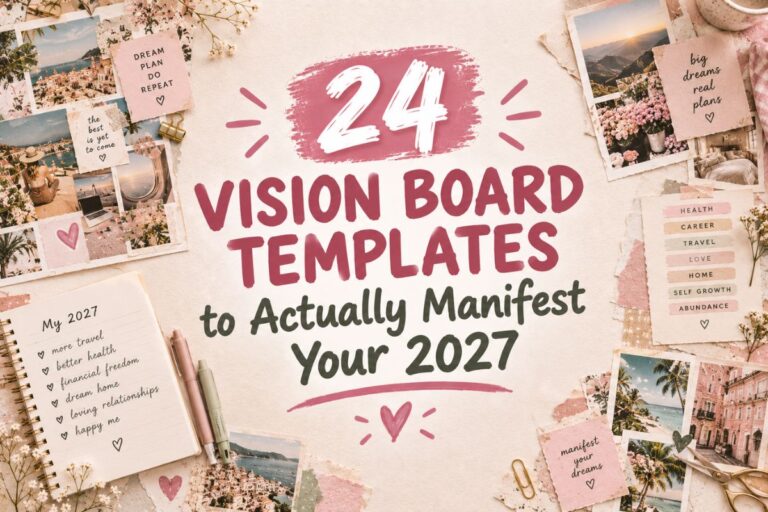
If a goal-driven system with monthly check-ins sounds like the better fit, this roundup covers 24 picks, from comprehensive year-long systems to niche, themed boards.
If you’re chasing an aesthetic rather than a milestone, this roundup covers 17 picks for weddings, homes, travel, and more.
FAQ
Is a vision board just a type of mood board?
Not quite. They can look similar at a glance — both are visual collages — but they’re built for different purposes: one for a specific future goal, the other for a present look or feeling. Think of them as related but separate tools.
Which one should I make for the new year?
Most people lean toward the goal-oriented format for a new year, since it’s built around milestones and a fresh start. That said, pairing it with an aesthetic layer for how you want the year to feel is a common and effective combination.
Do designers use vision boards too?
Occasionally, in product or brand work, to set overall direction and goals before diving into specifics. But for the visual, aesthetic side of a design project, most designers reach for the other format instead.
Can a mood board help with manifestation?
It’s less commonly used that way, since it’s not typically tied to specific goals or milestones. That said, if part of your manifestation practice is about embodying a feeling rather than chasing an outcome, this format can absolutely support that.
Final Thoughts
The short version: one is about where you’re headed, the other is about how things look and feel right now. Neither is more “correct,” and plenty of the best boards blend a little of both — the real question is just which one matches what you’re actually trying to create.
You May Also Like
This post contains affiliate links. If you buy through them, we may earn a small commission at no extra cost to you. Learn more.