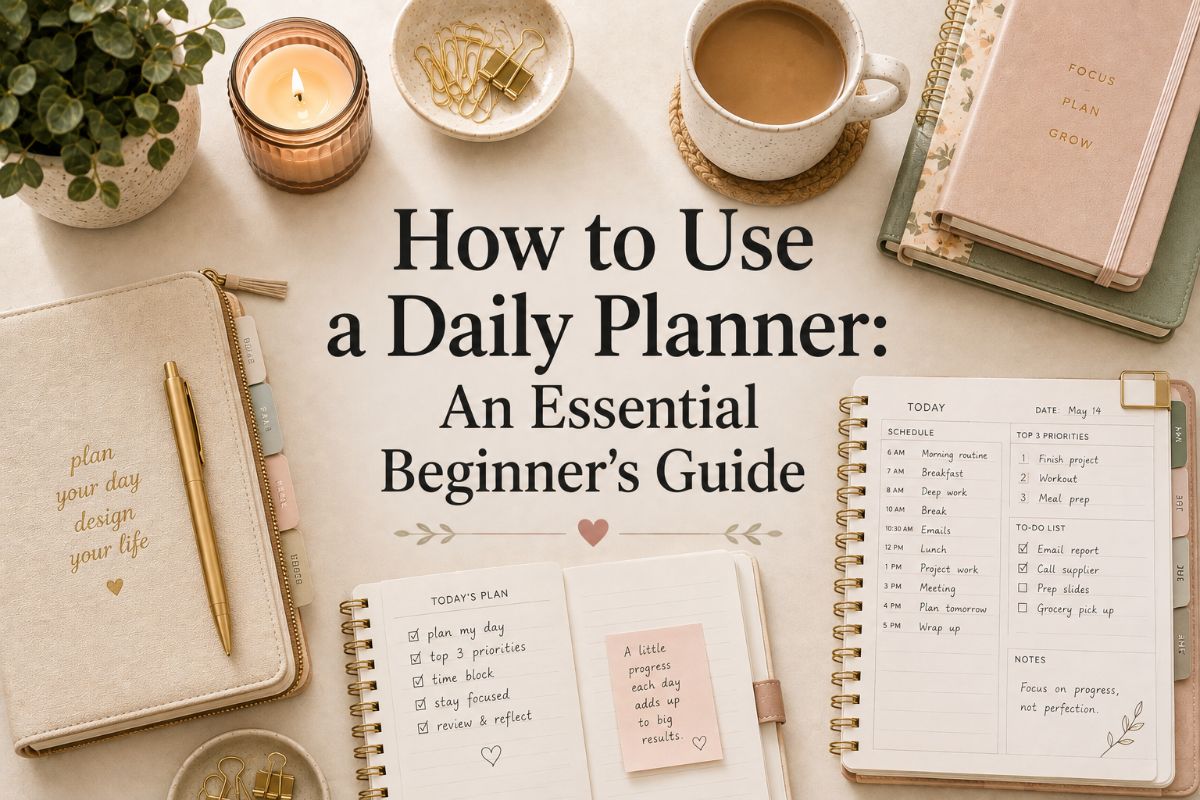
How to Use a Daily Planner: 5 Simple Habits for a More Manageable Day
Buying a daily planner is the easy part. Learning how to use a daily planner consistently, in a way that makes your days feel more manageable instead of adding one more thing to keep up with, is where most people get stuck. The good news is that using one well comes down to a handful of habits, not a complicated system.
Quick navigation
Table of Contents
Start With Your Top 3 Priorities
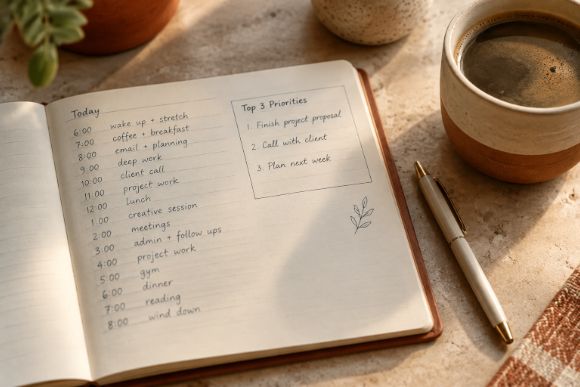
The first real step in how to use a daily planner is deciding what actually matters before filling in anything else: write down the three things that matter most today — not a full brain-dump of every task you can think of. As one overview of time management notes, prioritizing tasks helps separate what is urgent from what is merely time-consuming. An endless to-do list is one of the fastest ways to make a planner feel overwhelming instead of useful.
Everything else can go in a secondary task list or notes section, but your top three should be the first thing you look at and the last thing you check before closing the planner for the day.
Build In Time, Not Just Tasks
A list of tasks with no sense of how long each one actually takes tends to stay aspirational rather than realistic. If your planner has an hourly schedule, use it to block out roughly how much time each priority needs — this is often called time-blocking, and it turns a vague intention into something closer to a commitment.
Don’t forget to schedule buffer time between tasks, too. A day planned back-to-back with zero breathing room falls apart the moment anything runs long.
Make It Part of a Daily Ritual
A planner only helps if you actually open it, which is really a habit question more than a planning question. Pick one consistent moment — first thing in the morning with coffee, or the night before as a wind-down — and attach your planning time to something you already do every day.
Keeping the planner somewhere visible, like your desk or bag, rather than tucked in a drawer makes it far easier to actually remember to use it until the habit sticks on its own.
Leave Room for Notes and Overflow
Random thoughts, half-formed ideas, and things you want to remember later don’t belong mixed in with your scheduled tasks — give them their own notes section instead. This keeps your actual task list clean while still giving your brain somewhere to offload everything else.
It’s also the natural place for anything that didn’t get finished today, so you’re not stuck rewriting it from scratch tomorrow.
Track Habits Alongside Tasks
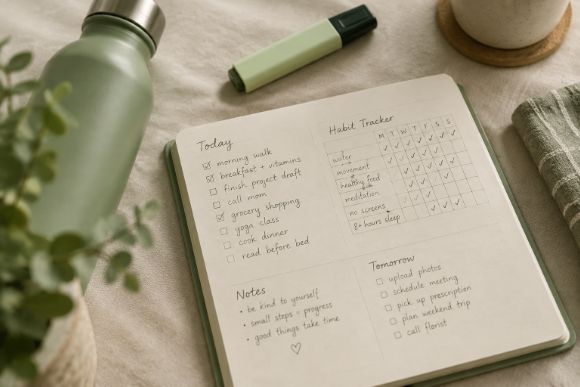
A daily planner isn’t only about deadlines — many people use the same page to track water intake, a workout, or a habit they’re building. If your planner has a space for this, use it; if it doesn’t, a small hand-drawn checkbox row in the margin works just as well.
Seeing a habit tracked right alongside your actual tasks tends to make it feel like a normal part of the day, rather than a separate project you have to remember on its own.
Common Beginner Mistakes
- Writing down every task with no priority order. If everything is equally important, nothing actually is — your top 3 should stand out clearly from the rest.
- Planning an unrealistically packed day. A schedule with no buffer time is a schedule that falls apart the first time something runs long.
- Using more than one planner at once. Splitting tasks between a personal planner and a separate work one often means neither gets checked consistently — start with just one.
- Giving up after missing a few days. A gap isn’t a failed attempt — picking it back up the next day is the habit working as intended.
Ready to Start? Here’s Where to Begin
Once you’ve got a sense of how you want to use it, our roundup covers daily planners for every style — simple free printables, full connected systems, and more.
FAQ
How long should planning my day actually take?
Most guides on this land around 10 to 15 minutes. If it’s taking much longer than that, you’re likely overplanning — the goal is a quick, realistic outline, not a perfectly detailed schedule.
Should I plan the night before or the morning of?
Either works, and it really comes down to personal preference. Planning the night before can help you start the morning with less to think about; planning in the morning lets you account for anything that changed overnight.
What if I don’t finish everything on my list?
That’s genuinely normal and not a sign you’re doing it wrong. Move whatever’s left to tomorrow’s list or notes section rather than treating an unfinished task as a failure.
Is it bad to miss a day in my planner?
No. A blank page here and there doesn’t undo the habit — picking it back up the next day matters far more than a perfect, unbroken streak.
Final Thoughts
So, how to use a daily planner well, really? It isn’t about finding the perfect system — it’s three priorities, a realistic sense of time, a consistent moment to check it, and the willingness to pick it back up after a missed day. Get those right and the planner itself matters far less than people think.
You May Also Like
This post contains affiliate links. If you buy through them, we may earn a small commission at no extra cost to you. Learn more.