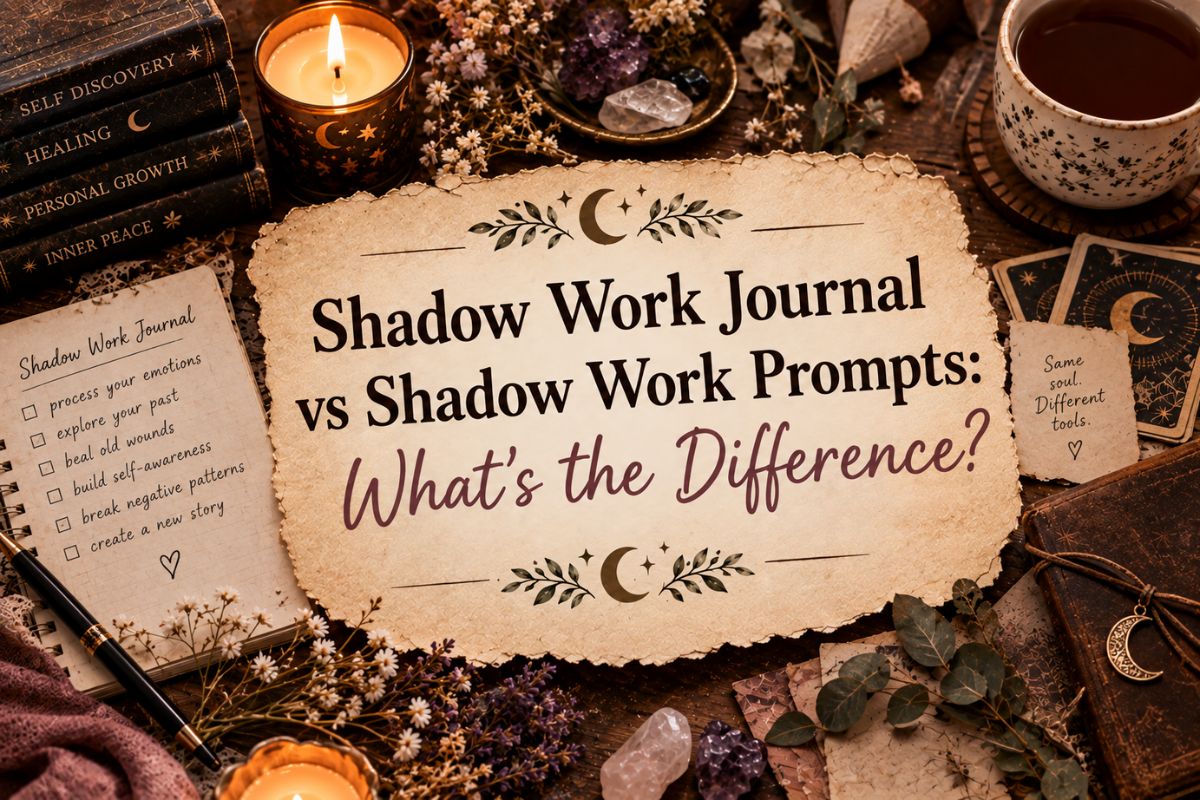
Shadow Work Journal vs Shadow Work Prompts: How to Choose Between a Full Book and a Simple List of Questions
These two terms get used almost interchangeably online, and it’s easy to see why — a lot of shadow work journals are built entirely around prompts, and a lot of prompt collections get called “journals” even though they’re really just a list of questions. But they’re not quite the same product, and knowing the difference will save you from buying a full workbook when all you actually wanted was a fresh set of questions.
Quick navigation
Table of Contents
Shadow Work Journal vs Shadow Work Prompts: The Quick Answer
A shadow work journal is the full package — a structured book with sections, guidance, and usually its own built-in prompts, worksheets, or trackers. Shadow work prompts are just the questions themselves, sold on their own so you can drop them into any notebook you already have. Think of the journal as the vehicle and the prompts as the fuel — a journal usually comes with prompts included, but prompts don’t require a dedicated journal at all.
| Shadow Work Journal | Shadow Work Prompts | |
|---|---|---|
| What you get | A full structured book or workbook | Just the questions, often as a list |
| Where you write | Directly in the journal itself | In any notebook or journal you already own |
| Structure | Sections, worksheets, sometimes trackers | A straightforward list, sometimes grouped by theme |
| Best for | Wanting guidance built in from the start | Wanting flexibility and your own format |
What Is a Shadow Work Journal?
A shadow work journal is a complete, structured book built around the practice — usually with an introduction to the concept, guided sections, and often its own prompts, affirmations, or trackers built in. Rather than handing you a blank page and a list of questions, it walks you through the process in a set order, which suits anyone who wants the thinking already done for them.
Many shadow work journals also lean into a specific angle — tarot, astrology, inner child healing, or a particular emotional pattern — so the whole book stays focused on one thread rather than jumping between unrelated topics.
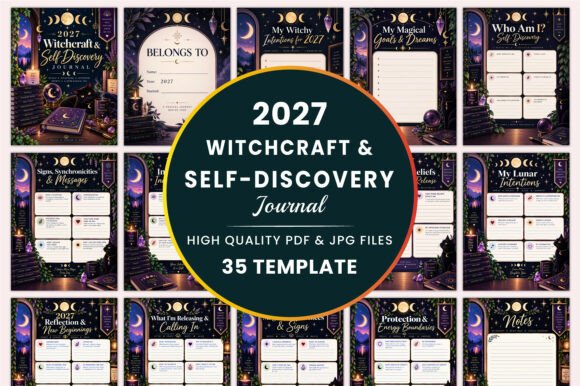
An example of what this looks like in practice: the 2027 Witchcraft & Self-Discovery Journal below is a full year-long book with its own structure, tone, and built-in guidance from cover to cover.
What Are Shadow Work Prompts?
Shadow work prompts are simply the questions — sold as a standalone list rather than packaged inside a full workbook. There’s no cover design to think about, no worksheets to fill out, no built-in structure beyond however the questions happen to be grouped. You bring your own notebook, planner, or digital app, and the prompts are what you actually write in response to.
Because they’re not tied to a specific book, prompt collections tend to come in much larger quantities — sets of 500 or even 1000+ questions are common, since there’s no page limit to work around the way there is with a printed journal.
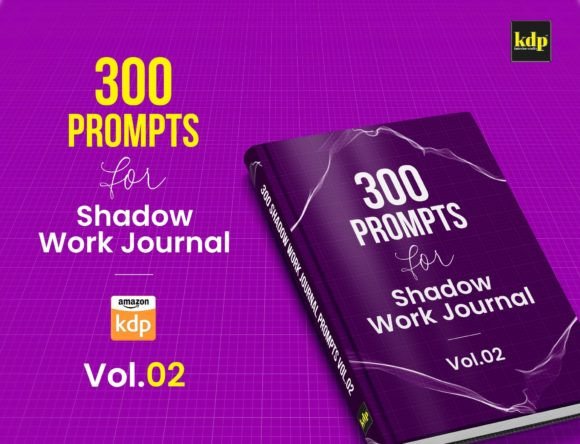
An example of what this looks like in practice: the 300 Shadow Work Journal Prompts Vol.02 below is exactly that — a list of questions, meant to be dropped into whatever you’re already journaling in.
Key Differences Between the Two
- What you’re actually buying. One is a full book; the other is just a list of questions.
- Where you write. A journal gives you the physical or digital pages built in. Prompts require you to supply your own notebook or app.
- Structure. A journal usually walks you through a set order or theme. A prompt list is often more flexible, letting you pick and choose.
- Quantity. Journals are limited by page count. Prompt collections regularly run into the hundreds or thousands of questions.
- Price and commitment. A full journal is usually a bigger single purchase; a prompt list is often a lighter way to try shadow work before committing to a whole book.
Which One Is Right for You?
A quick way to tell which one fits what you actually need:
- Want the structure and guidance already figured out for you? A full journal does that work upfront.
- Already keep a notebook or planner and just want fresh questions? A prompt collection drops straight in.
- Not sure shadow work is for you yet? A smaller prompt set is a lower-commitment way to test it out.
- Want a specific angle — tarot, astrology, inner child work — built into the whole experience? A themed journal usually delivers that more fully than a prompt list alone.
Can You Use Both Together?

Yes, and it’s actually one of the more common approaches. Plenty of people keep a full shadow work journal for their main practice and add a separate prompt collection alongside it for days when the journal’s built-in questions have already been answered, or when they want to explore a theme the journal doesn’t cover.
There’s no real conflict between the two — a prompt collection can extend a journal’s life well past its own built-in questions, rather than needing to buy an entirely new book once you’ve worked through the first one.
Ready to Start? Here’s Where to Begin
If a full, guided book sounds like the better fit, our roundup covers journals built around everything from general reflection to tarot, astrology, and inner child healing.
If you’d rather add fresh questions to a notebook you already own, this roundup covers prompt collections in a range of sizes and themes.
FAQ
Do shadow work journals already include prompts?
Most do. A full journal almost always builds its own prompts into the structure, alongside other elements like worksheets, trackers, or an introduction to the practice. That’s part of what you’re paying for with a full journal rather than a standalone prompt list.
Can I use shadow work prompts in a journal I already own?
Yes — that’s exactly what a standalone prompt collection is for. It’s not tied to any specific book, so it works in any notebook, planner, or even a notes app on your phone.
Which one is cheaper to start with?
Prompt collections are usually the lighter option, since you’re only paying for the questions rather than a full designed book. If you already have a notebook sitting around, a prompt list is often the lower-cost way to try shadow work before investing in a complete journal.
Which is better for someone completely new to shadow work?
A full journal tends to be gentler for beginners, since it usually explains the concept and guides you through a set order rather than handing you a long list of questions with no direction. A prompt collection works fine too, but it helps to already have a sense of how you want to approach the questions.
Final Thoughts
The short version: a journal is the whole book, prompts are just the questions. Neither is the “correct” choice on its own — plenty of people end up using both, one as their main practice and the other to keep it going once the first book runs out of pages.
This post contains affiliate links. If you buy through them, we may earn a small commission at no extra cost to you. Learn more.