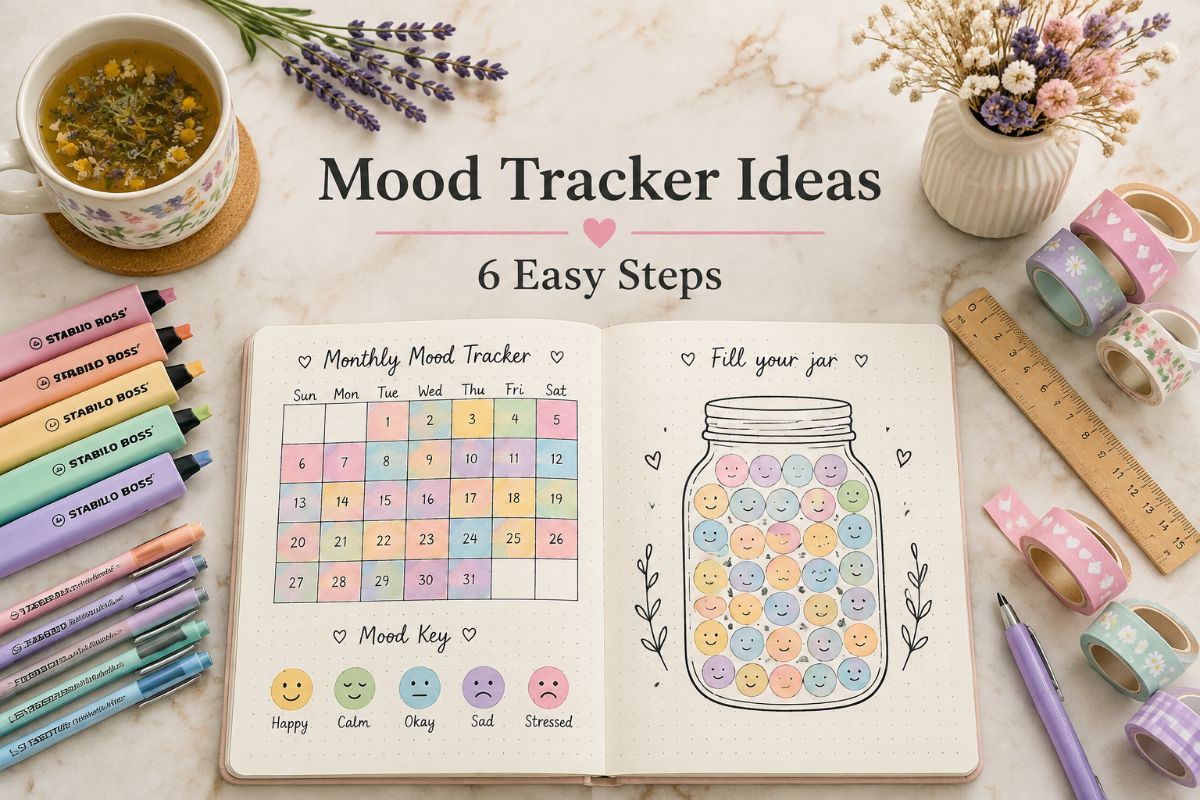
Mood Tracker Ideas: How to Make a Mood Tracker in 6 Easy Steps
A mood tracker is one of the easiest journaling habits to start. Each day you mark how you felt with a color, a symbol, or a short word, and after a few weeks the page begins to show patterns you might never notice day to day.
This guide shows how to make a mood tracker in six simple steps, from choosing a time frame to reviewing your month. You will also find 15 mood tracker ideas for easy, bullet journal, and monthly layouts, fixes for common problems, and two templates that make a good first page.
Quick navigation
Table of Contents
What You Need to Start a Mood Tracker
You can start today with things you probably already have:
- A notebook or planner. A dotted bullet journal makes drawing grids easy, but any notebook works.
- Colored pens or pencils. Five to seven colors are enough. Highlighters and fine liners work well too.
- A ruler. Helpful for neat grids and boxes if you draw the layout yourself.
- A printable template (optional). A ready-made mood tracker page saves time and keeps the layout tidy.
- Five minutes a day. Most mood trackers take less than a minute to fill in once they are set up.
How to Make a Mood Tracker in 6 Steps
Here is the whole process, from a blank page to a finished month. The same steps work in a bullet journal, a planner, or on a printed sheet.
Step 1: Choose Your Time Frame
Decide first how much of your life one page will hold. A daily page shows a single day in detail, a monthly mood tracker shows about thirty days at a glance, and a Year in Pixels page fits all 365 days on one sheet.
If you are new to mood tracking, start with one month. It is long enough to show real patterns and short enough that you can try a new layout next month if this one does not feel right.
Step 2: Pick Five to Seven Moods
Write a short list of the moods you feel most often, such as happy, calm, tired, anxious, sad, and frustrated. Five to seven moods is the sweet spot: enough to be honest, but not so many that choosing one becomes a chore.
Use your own words. If “meh” or “overwhelmed” describes your days better than “neutral” or “stressed,” put that on the list. The tracker only works if the words feel true to you.
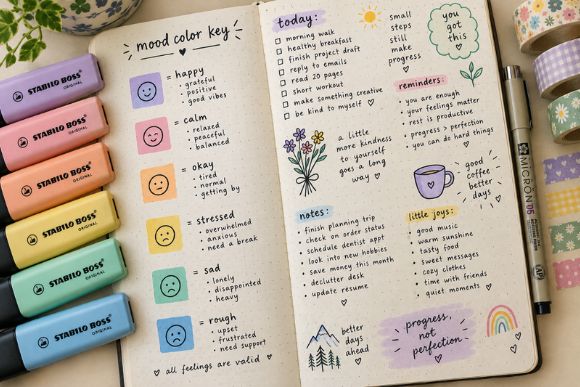
Step 3: Create a Color Key
Give each mood a color or a symbol and draw a small key in the corner of the page. Many people use warm colors for good days and cool colors for heavy ones, but any system works as long as you keep it the same all month.
If coloring feels like too much, use emoji faces, simple dots, or numbers from 1 to 5. Write the key on every new page, so you never have to guess what a color meant three weeks later.
Step 4: Draw or Print the Layout
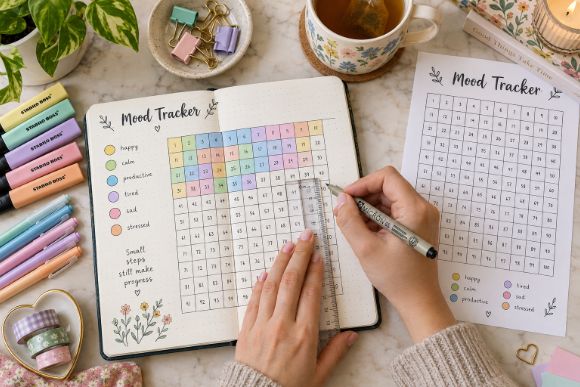
Now give each day its own space. The simplest layout is a grid of numbered squares, but you can also use a circle divided into slices, a row of leaves on a branch, or any picture with about thirty small parts to color.
You can draw the layout by hand in a bullet journal or print a ready-made template. Printed pages save time and keep the shapes even, which is helpful if drawing feels stressful rather than relaxing.
Step 5: Add One or Two Extras
Mood rarely changes on its own, so a few extra lines can explain a lot. Choose one or two things that often affect how you feel, such as hours of sleep, energy, water, or time outside, and add a small row for them under the mood grid.
Keep the extras few. Tracking ten things a day turns a calm habit into homework, and the habit usually stops after a week.
Step 6: Fill It In and Review Each Month
Pick a regular moment, such as right before bed, and color in the day. If you missed a few days, leave them blank and carry on; a tracker with gaps still shows more than no tracker at all.
At the end of the month, look at the page as a whole. Notice which colors appear most, which days of the week feel heavier, and whether sleep or busy weeks line up with low moods. Write one sentence about what you learned before starting the next page.
Which Mood Tracker Layout Fits You?
Layouts differ in how much time they take and what they show. This table compares the most common ones:
| Layout | Best For | Time per Day | Effort |
|---|---|---|---|
| Year in Pixels | Seeing the whole year | A few seconds | Very easy |
| Monthly grid | First-time trackers | Under a minute | Easy |
| Picture layout | Creative bullet journals | About a minute | Medium |
| Weekly page | Busy schedules | About a minute | Easy |
| Daily journal page | Understanding why moods change | Five to ten minutes | Medium |
If you are unsure, a monthly grid is the safest first choice. It is quick to set up, quick to fill in, and still shows clear patterns by the end of the month.
15 Mood Tracker Ideas to Try
Once the basics are in place, the layout is where you can have fun. Here are fifteen ideas, from the simplest to the most creative:
Easy Mood Tracker Ideas
- Numbered grid. Thirty-one small squares in rows of seven, colored one per day.
- Emoji row. Draw a tiny face for each day along the top of a monthly page.
- Dot calendar. One colored dot per day on the monthly spread you already use.
- Mood scale. Rate each day from 1 to 5 and connect the dots into a simple line chart.
- Year in Pixels. A grid of 12 columns and 31 rows, one square for every day of the year.
Bullet Journal Mood Tracker Ideas
- Mood jar. Draw a glass jar and fill it with thirty-one small circles, like marbles or candy.
- Bookshelf. Each book spine is a day, colored to match your mood, which is perfect for readers.
- Mandala or circle. Divide a circle into slices, one per day, and color it from the center outward.
- Coffee cups. A row of small mugs, one per day, for anyone who checks in over morning coffee.
- Window panes. A building with a window for every day, which looks lovely once the month is full.

Monthly Mood Tracker Ideas
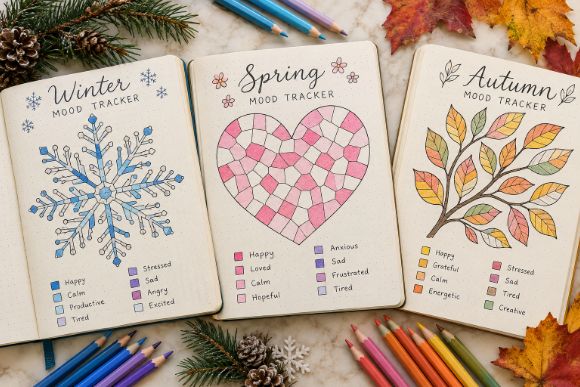
- January snowflakes. A snowflake with thirty-one arms or a cluster of small snowflakes to color.
- February hearts. A large heart split into twenty-eight or twenty-nine small sections.
- Spring flowers. A bunch of flowers for March, April, or May, one petal per day.
- Summer shells or fruit. Seashells, strawberries, or lemons for the warm months.
- Autumn leaves. A branch with thirty or thirty-one leaves for September to November.
For even more layouts and ready-made pages, browse our roundup of mood tracker templates, with 32 picks from daily journals to Year in Pixels sheets.
Common Mistakes and Quick Fixes
Most mood trackers stop for the same few reasons. Here is how to keep yours going:
- You forget to fill it in. Tie it to something you already do every evening, such as brushing your teeth, and keep the page open on your desk or nightstand.
- There are too many moods. If choosing a color takes longer than a few seconds, cut the list down to five or six moods.
- Every day looks the same. Add a second mark for the morning and the evening, or a short note, so you can see smaller changes.
- The layout takes too long to draw. Use a simple grid or a printed template and save the creative designs for months when you have more time.
- Missed days feel like failure. Leave them blank and move on. The goal is awareness, not a perfect page.
Two Mood Tracker Templates to Start With
You can follow every step in this guide with a pen and a blank page, but a ready-made template lets you skip the drawing and start tracking tonight. Here are two easy first picks:
EASIEST FIRST PAGE
Year in Pixels Mood Tracker
If you want to start with the simplest possible layout, this classic Year in Pixels page gives every day of the year one small square. It takes only seconds to fill in, so it is easy to keep up.
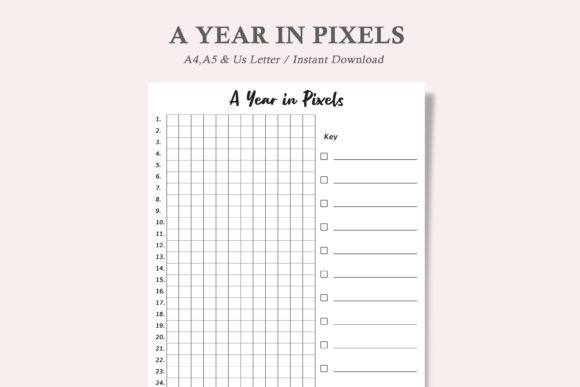
Sizes: US Letter, A5 | Format: PDF, JPEG
Best for: beginners who want a quick, low-effort layout. It shows the yearly option from Step 1 in action.
- One square for each day of the year
- Minimal design that saves ink
- Editable PDF version
- Reprint whenever you start a new year
- Fits A5 planners and letter binders
Add your own color key in the margin, as described in this guide, and the page is ready to use. By the end of the year, the colored grid shows which seasons felt brighter and which felt heavier. Choose it if you want a visual habit that takes almost no time. Skip it if you want room to write about each day.
BEST FREE START
Free Daily Mood Tracker Canva Template
This free template tracks emotions, energy, sleep, and habits on a simple daily page. It is a low-risk way to try a more detailed tracker before choosing a bigger journal.
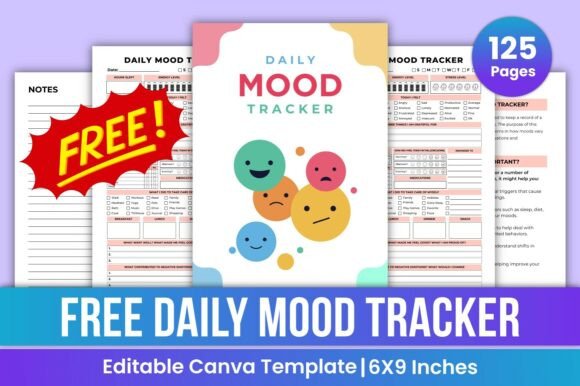
Pages: 125 | Size: 6 x 9 in | Format: PDF, JPG, PNG
Best for: anyone who wants a ready mood key and daily extras. It already covers Step 3 and Step 5 for you.
- Daily page for emotions, energy, sleep, and habits
- Mood guide page
- Notes pages
- Belongs-to page for your name
- Change text, colors, and fonts in Canva
Because the template opens in Canva, you can rename the moods and change the colors to match your own key. With more than a hundred daily pages, it covers several months of tracking. Choose it if you want to start without spending anything. Skip it if you prefer a single monthly overview.
For more options, from ADHD and anxiety journals to cute monthly pages, see our full list of mood tracker templates.
FAQ
What do you put in a mood tracker?
At minimum, one mark for each day that shows your overall mood. Many people also add a color key, a few words about the day, and one or two extras such as sleep or energy, which often explain why a mood changed.
How do I make a simple mood tracker in my bullet journal?
Draw a grid of thirty-one small squares, write the numbers 1 to 31 inside, and add a color key with five or six moods beside it. Each evening, color the square for that day. That is all you need to begin.
How many moods should a mood tracker have?
Five to seven moods work best for most people. Fewer than five can feel too vague, while more than seven makes choosing slow and the finished page harder to read.
Is it better to track mood once or twice a day?
Once a day, in the evening, is enough for most people. If your mood often changes during the day, a morning and evening mark gives a more honest picture.
When should I talk to a professional about my mood?
A mood tracker is a tool for self-awareness, not a diagnosis or a treatment. If low mood, worry, or stress lasts for two weeks or more, or starts to affect sleep, work, or relationships, talk to a doctor or a mental health professional, and bring your tracker along. If you ever have thoughts of harming yourself, contact your local emergency number or a crisis line right away. In the US, you can call or text 988.
Final Thoughts
Making a mood tracker comes down to a few simple choices: a time frame, a short list of moods, and a color key you keep the same all month. Start with one easy layout, fill it in at the same time each evening, and look back when the month ends. Small marks add up, and before long your page will show you what helps you feel your best.
To balance tracking hard days with noticing good ones, these daily gratitude journals narrow your focus to what you are thankful for.
This post contains affiliate links. If you buy through them, we may earn a small commission at no extra cost to you. Learn more.