What Is Bullet Journaling? A Beginner’s Guide to the Simple System Behind the Pretty Spreads
Scroll Pinterest for more than a minute and you’ll run into a bullet journal spread — color-coded habit trackers, hand-lettered headers, washi tape borders. It looks like art, which makes it easy to wonder what is bullet journaling actually about underneath all that decoration, or whether you need to be naturally creative to pull it off. The real answer is much simpler than the prettiest examples make it look.
Quick navigation
Table of Contents
What Is a Bullet Journal?
A bullet journal is a notebook-based organization system, created in 2013 by digital product designer Ryder Carroll, built around a method he called “rapid logging.” Rather than writing full sentences, you jot down short entries next to simple symbols — a dot for a task, a circle for an event, a dash for a note — so you can capture a lot of information quickly without it turning into a wall of text.
Carroll describes the goal as helping you “track the past, organize the present, and plan for the future” all in one place. Unlike a pre-printed planner, a bullet journal starts as a blank notebook — you build the structure yourself, which means it can look like almost anything from a plain, functional list-keeper to the elaborately decorated spreads you see online.
The Core Components of a Bullet Journal
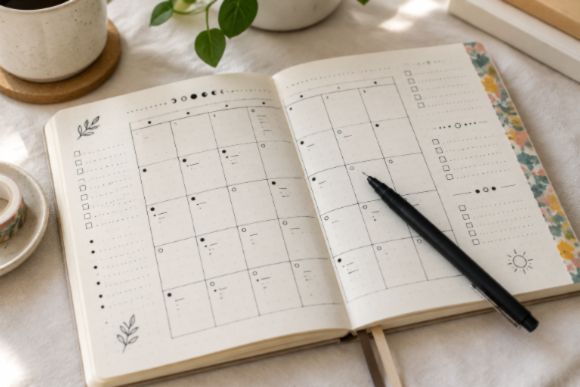
The original method is built around a handful of core sections, and most people’s bullet journals still include some version of each one:
- Index. A running table of contents at the front, since pages aren’t assigned to fixed topics ahead of time.
- Future Log. A single spread covering the next several months, for events and deadlines too far out for a monthly page yet.
- Monthly Log. A calendar overview plus a running task list for the month ahead.
- Daily Log. Where the actual rapid logging happens — tasks, events, and notes for each day as they come up.
- Collections. Any additional page dedicated to a single topic — a reading list, a habit tracker, meal planning — added wherever you need it and noted in the Index.
- Key. A short legend explaining what each symbol means, so the shorthand stays consistent throughout the notebook.
Why People Switch to Bullet Journaling
The most common reason people move from a pre-printed planner to a bullet journal is frustration with pages designed for a life that doesn’t quite match their own — three lines for Tuesday when they needed ten, a fitness tracker they never use taking up space every single week. Because every page in a bullet journal is built from scratch, you only ever create the sections you’ll actually use.
That flexibility cuts both ways, though. It also means there’s no pre-built structure to fall back on if you’re someone who prefers a system already laid out for you — which is worth knowing honestly before you buy a notebook and dive in.
How to Start Your First Bullet Journal
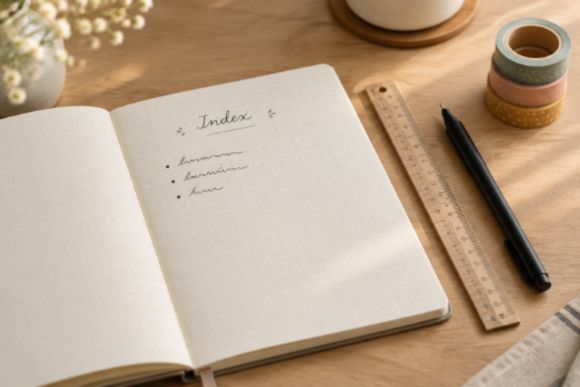
All you technically need is a notebook and a pen, though a dotted notebook makes drawing straight lines and boxes noticeably easier than plain paper. A practical way to begin:
- Set aside a few pages for your Index at the very front, even though it’ll stay mostly empty at first.
- Set up just the current month rather than planning your whole year on day one — a simple calendar overview plus a task list is enough to start.
- Start rapid logging your days using simple symbols for tasks, events, and notes, and write your own key on an early page so you don’t forget what each one means.
- Add a Collection only when you actually need one — a specific list or tracker — rather than pre-building pages you might never fill in.
Most beginner guides on the subject agree on one thing above all: start simple, and let your system grow only as you find you actually need more from it.
Common Mistakes Beginners Make
- Comparing your first spread to a Pinterest expert’s hundredth. Those elaborate layouts are usually the product of months or years of practice, not a beginner’s starting point.
- Building every Collection you can think of on day one. Empty trackers you never fill in just make the notebook feel like a failure rather than a useful tool.
- Skipping migration. Part of the original method involves reviewing unfinished tasks each month and deciding whether to carry them forward, drop them, or move them to a Collection — skipping this step is how notebooks quietly fill up with abandoned to-dos.
- Giving up after one imperfect month. Most people who stick with it describe a real adjustment period before the system starts to feel natural rather than effortful.
Ready to Start? Here’s Where to Begin
Once you’ve got the basic system down, the fun part is making it your own. Our roundup covers layouts and themes for every level, from clean and minimal spreads to more decorative ones.
FAQ
Do I need a special notebook to bullet journal?
No. Any notebook works, though many people prefer a dotted grid over lined or blank paper since it makes drawing boxes, tables, and habit trackers easier without showing up as obviously as full lines would.
How long does it take to get good at bullet journaling?
The basics can be learned in a matter of minutes, but most people describe a couple of months before the system genuinely feels like a habit rather than something they have to think hard about each day.
Is bullet journaling the same as a planner?
Not quite — a planner comes with pages already laid out for you, while a bullet journal starts blank and is built page by page as you go. There’s more on how the two actually compare in our separate guide on bullet journals versus planners.
Do I have to make my spreads artistic?
Not at all. The original method is entirely function-first — the decorative, hand-lettered spreads you see online are a popular offshoot, not a requirement of the system itself.
Final Thoughts
So, what is bullet journaling, once you strip away the decoration? Really just an index, a monthly overview, and a running daily list — built by hand instead of pre-printed. Start with those basics, keep it simple for the first month, and let the decoration come later, if it comes at all.
You May Also Like
This post contains affiliate links. If you buy through them, we may earn a small commission at no extra cost to you. Learn more.