Reading Journal Ideas: How to Start a Reading Journal in 6 Easy Steps
A reading journal is a notebook where you keep track of the books you read, what you thought of them, and what you want to read next. It is part record, part creative project, and it turns every finished book into a memory you can flip back to.
This guide shows how to start a reading journal in six simple steps, from choosing paper or digital to reviewing each month. You will also find 15 reading journal ideas for cover pages and spreads, fixes for common mistakes, and two templates that make a good first page.
Quick navigation
Table of Contents
What You Need to Start a Reading Journal
You can start with very little. Here is the basic kit:
- A notebook or template. A dotted notebook makes layouts easy, but any notebook, printable, or digital journal works.
- Pens and highlighters. A black fine liner for writing and a few colors for bookshelves and headings.
- A ruler. Helpful for neat tables, bookshelves, and challenge grids.
- Stickers or washi tape (optional). A few bookish stickers make pages feel finished.
- Your current book. Start with the book you are reading now, so your first entry is ready today.
How to Start a Reading Journal in 6 Steps
Here is the whole process, from a blank notebook to a journal you will want to open every week. The same steps work on paper and on a tablet.
Step 1: Choose Paper or Digital
Start by deciding where your reading journal will live. A paper notebook or printed pages are relaxing to fill in by hand and easy to decorate, while a digital journal in GoodNotes or Notability keeps hundreds of books in one file that goes everywhere with your tablet.
If you are unsure, think about where you read. If you read on the couch with a pen nearby, paper will feel natural. If your tablet is always with you, a digital journal is easier to keep up.
Step 2: Make a Cover Page
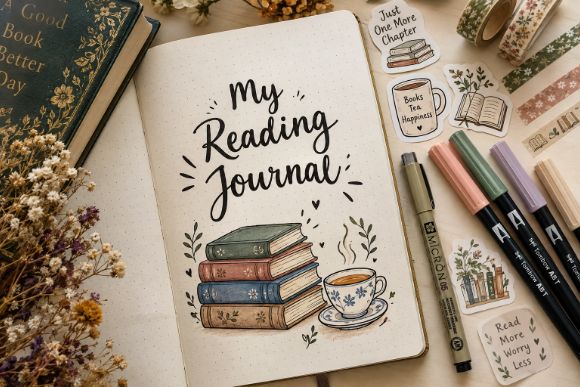
A cover page sets the mood for the whole journal. Write a title such as My Reading Journal or Book Log, add your name, and decorate it with a doodle, a quote you love, or a few bookish stickers.
Keep it simple if drawing is not your thing. A clean title in nice lettering and one small illustration, like a stack of books or a cup of tea, looks lovely and takes only a few minutes.
Step 3: Set Up a Bookshelf or Reading Log
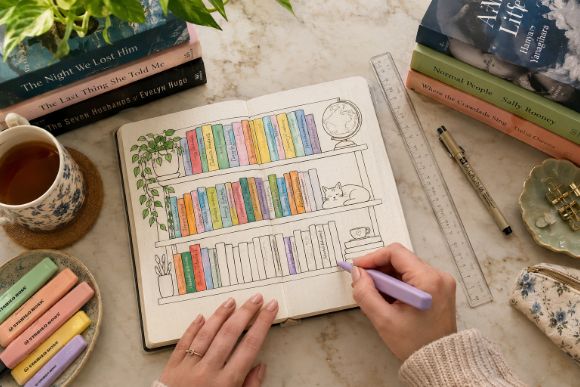
Next, give yourself one page where every book you finish is recorded. A reading log is a simple list with the title, author, and dates. A bookshelf spread does the same job visually: you draw empty book spines and color one in for each book you finish.
Choose the version you will enjoy filling in. Many readers keep both, a log for the facts and a bookshelf for the fun, colorful overview of the year.
Step 4: Add a Review Page
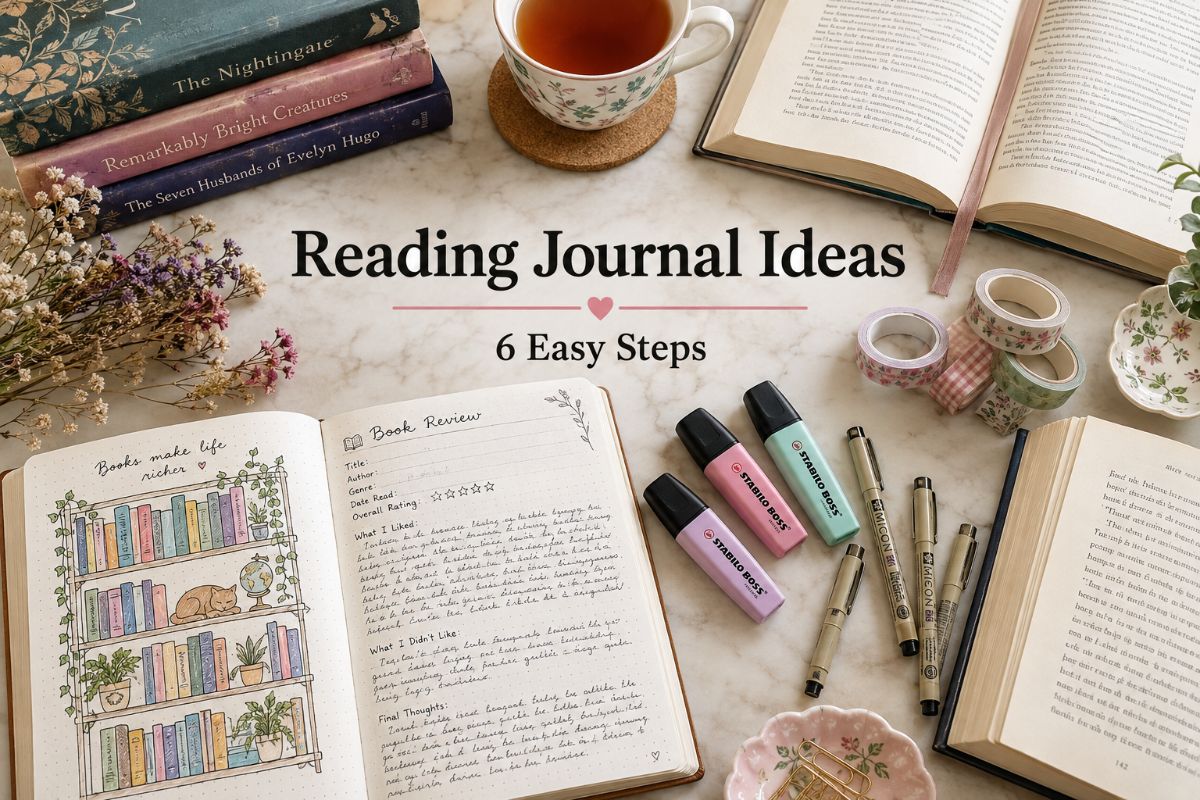
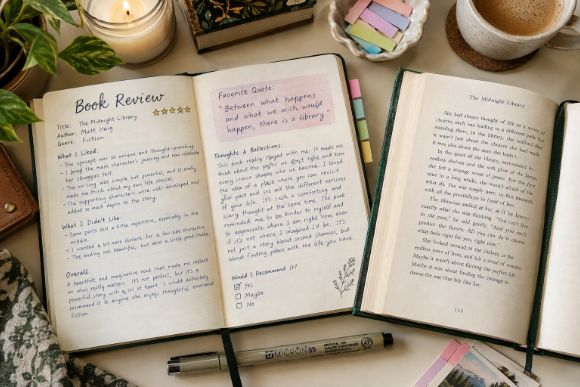
A review page is where your reading journal comes to life. Leave space for the title, author, genre, a star score, a short summary, your favorite quote, and a few lines on what you thought of the book.
You do not need to write a review for every book. Save full pages for the stories that stayed with you, and log the rest in one line.
Step 5: Plan a TBR List and a Challenge
A to-be-read list, often called a TBR, keeps track of the books you want to read next. Add a page for it near the front of your journal and write down every recommendation you hear about.
If you like goals, add a reading challenge page as well, such as 25 books in a year, one book from every genre, or a bingo card with fun prompts. Fill in a square each time you finish a book that fits.
Step 6: Review Each Month
At the end of each month, add a short wrap-up page. List what you read, choose your favorite book of the month, and copy one quote worth keeping.
This small habit makes the journal feel finished month after month. It also shows you patterns, such as which genres you reach for most, which can help you choose your next book.
Which Reading Journal Spreads to Start With?
You do not need every spread on day one. This table shows which pages to set up first:
| Layout | Best For | Time per Day | Effort |
|---|---|---|---|
| Reading log | Recording every book | About 10 minutes | Easy |
| Bookshelf spread | A colorful year overview | About 20 minutes | Medium |
| Review page | Remembering favorite books | A few minutes per book | Easy |
| TBR list | Planning what to read next | About 5 minutes | Easy |
| Reading challenge | Staying motivated | About 15 minutes | Medium |
If you only set up one spread, make it the reading log. It takes a few minutes and gives you a record of every book from the first day.
15 Reading Journal Ideas to Try
Once the basics are in place, these reading journal ideas make your pages more personal and more fun to fill in:
Reading Journal Cover Page Ideas
- Stack of books. Draw a tall stack of books and write the journal title on the spines.
- Favorite quote. Letter a line from a book you love in the center of the page.
- Cozy reading nook. A simple armchair, a lamp, and a cup of tea set a warm mood.
- Library card. Design the cover like an old library card with your name and the start date.
- Botanical frame. Surround the title with leaves and small flowers for a soft, calm look.
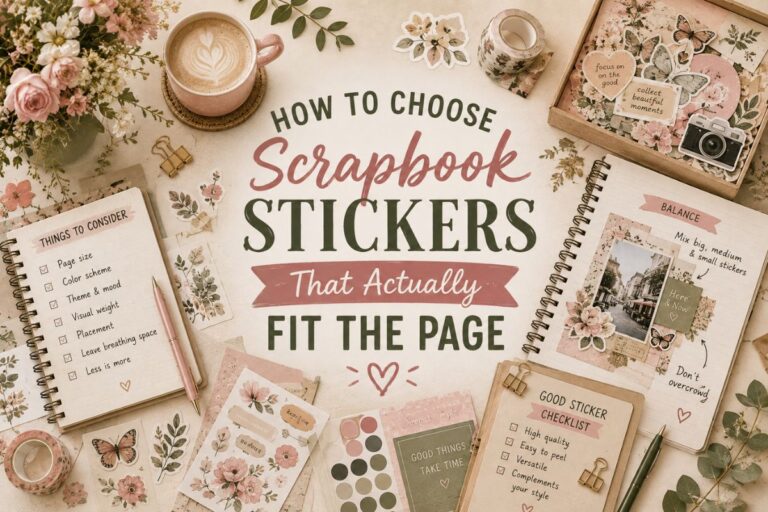
For more inspiration, browse these journal cover designs before you decorate the first page.
Reading Journal Spreads to Track Books
- Bookshelf tracker. Color one spine for every book you finish, in the main color of its cover.
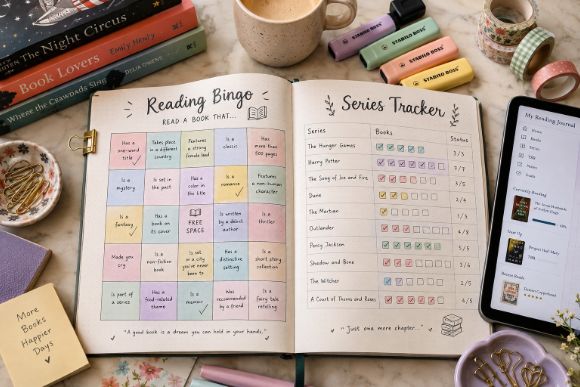
- Series tracker. A row for each series with a box for every book, so you know what comes next.
- Genre wheel. A circle split into genres that you color a little more each time you read one.
- Reading bingo. A grid of prompts, such as a book with a blue cover or a book set abroad.
- Year in books. Twelve small boxes, one per month, with the titles you finished.
Creative Reading Journal Page Ideas
- Character page. Keep a list of characters with a few words about each one, which is handy for long novels.
- Quote collection. A page of favorite lines with the book and page number.
- Book mood board. Collect images, colors, and words that capture the feeling of a book.
- Did not finish list. Note books you put down and why, so you can learn what you do not enjoy.
- Book-to-movie page. Compare a book with its film and decide which one you liked better.
For ready-made pages in every style, browse our roundup of reading journal templates, with 32 picks from digital journals to cozy printables.
Common Mistakes and Quick Fixes
Most reading journals stop for the same few reasons. Here is how to keep yours going:
- Too many spreads at once. Start with a log, a review page, and a TBR list. Add more pages only when you miss them.
- Falling behind on reviews. Write one line right after you finish a book, and add more later if you want to.
- Pages that feel too plain. Add a sticker, a quote, or a small doodle. Small touches make a big difference.
- Running out of space. Leave a few blank pages after each section, or use a printable or digital journal where you can add pages.
- Comparing with others. Your journal does not need to look like the photos online. It only needs to work for you.
Two Reading Journal Templates to Start With
You can follow every step in this guide with a blank notebook, but ready-made pages let you skip the drawing and start tracking tonight. Here are two easy first picks:
EASIEST FIRST SPREAD
Bookshelf Tracker
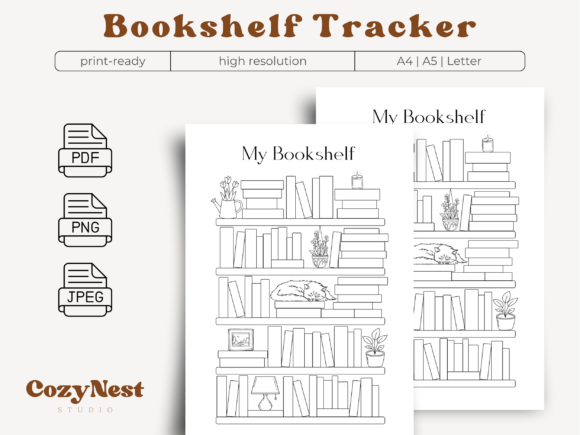
If you want a bookshelf spread without drawing every spine yourself, this page gives you a ready shelf to color in. Each spine is a book you finish, labeled with its title.
Sizes: A4, A5, Letter | Format: PDF, PNG, JPEG
Best for: readers who want a colorful overview of their year. It is the bookshelf from Step 3, ready to print.
- Bookshelf with empty spines
- Color each spine as you finish a book
- Works for a to-be-read list too
- Safe margins for binders
- Usable in print or on a tablet
Watching the shelf fill with color is a simple, motivating way to see how much you read. Printing instructions are included. Choose it if you love a visual tracker. Skip it if you want written reviews.
BEST FIRST REVIEW PAGE
Book Review Template
This template gives you two review layouts with space for your thoughts, characters, and favorite quotes. It is an easy way to add a proper review page to any journal.
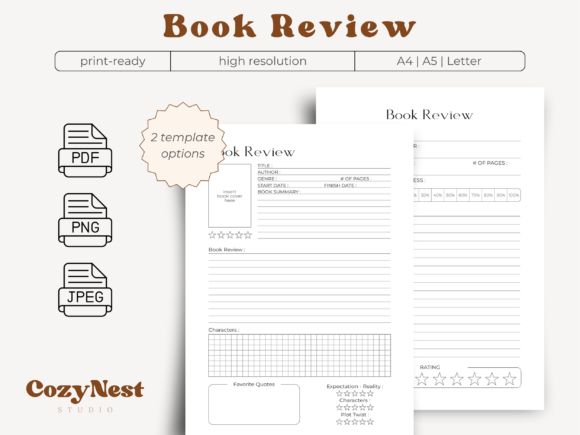
Layouts: 2 | Sizes: A4, A5, Letter
Best for: readers who want a ready review page. It covers Step 4 for you.
- Two review layouts
- Character analysis section
- Favorite quotes section
- Star score for each book
- Safe margins for binders
The character section helps with long novels and book club talks. You can print it or use it on a tablet. Choose it if you write full reviews. Skip it if you only want a short log.
For more options, from GoodNotes journals to cozy themed pages, see our full list of reading journal templates.
FAQ
What do you put in a reading journal?
Most reading journals include a reading log, review pages, a to-be-read list, and favorite quotes. Many readers also add a bookshelf spread, a reading challenge, and a monthly wrap-up.
How do I start a reading journal for beginners?
Choose a notebook or template, make a simple cover page, and set up three pages: a reading log, a review page, and a TBR list. Then log the book you are reading now and add more spreads as you go.
What is a TBR in a reading journal?
TBR stands for to be read. It is a list of books you plan to read, so you always know what to pick up next.
Can I keep a reading journal on my iPad?
Yes. Digital reading journals work in apps such as GoodNotes and Notability. Hyperlinked tabs let you jump between your library, reviews, and challenges in a tap.
How often should I update my reading journal?
Log each book when you finish it, and add a short wrap-up once a month. That is enough to keep the journal complete without it feeling like a chore.
Final Thoughts
Starting a reading journal comes down to a few simple pages: a cover, a reading log, a review page, and a list of books to read next. Begin with those, add spreads you enjoy as you go, and look back at the end of each month. Before long, your journal will be a record of every story that mattered to you.
This post contains affiliate links. If you buy through them, we may earn a small commission at no extra cost to you. Learn more.