
How to Time Block Your Day: 6 Beginner Steps to a Realistic, Less Overwhelming Schedule
If you had to guess how much of your workday actually goes toward meaningful work, the real number is probably lower than you’d like. Learning how to time block your day won’t magically create more hours, but it does force a realistic question most to-do lists skip entirely: does everything you want to do today actually fit?
Quick navigation
Table of Contents
Step 1: List Everything That Needs Your Attention
The first real step in how to time block your day is getting everything out of your head and onto paper before touching a calendar — tasks, meetings, routines, and the small responsibilities that tend to get forgotten until the last minute. As one overview of timeboxing notes, allocating a fixed time period to a task in advance usually improves efficiency and counters procrastination. This brain-dump step matters more than it seems; you can’t realistically schedule time for something you haven’t actually written down yet.
Don’t worry about order or priority at this stage. The goal is just to see everything in one place before deciding what goes where.
Step 2: Estimate How Long Each Task Actually Takes
Next to each item on your list, jot down a rough time estimate. This is also the step where most beginners go wrong — chronically underestimating how long things actually take. A simple fix many guides recommend: take your gut-feeling estimate and multiply it by 1.5. If a task feels like an hour, block 90 minutes instead.
A day that finishes a little early feels far better than one that runs consistently late, so it’s worth erring generous rather than optimistic.
Step 3: Block Your Most Important Work First
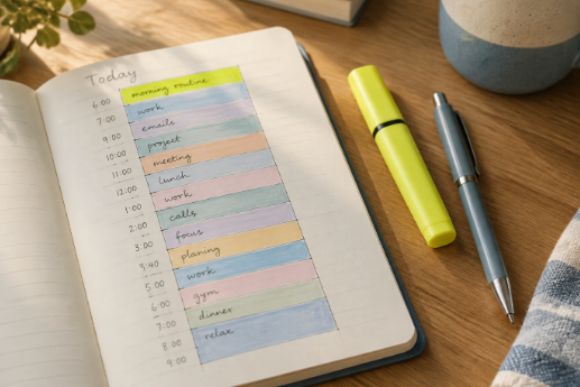
Take your top priority task — the one that actually matters most today — and schedule it during whatever part of the day you tend to have the most focus. For most people that’s a window sometime in the morning, though for genuine night owls it might land later.
Protect this block fiercely. Everything else on your list can shift around it, but your single most important task shouldn’t be the one that gets bumped when the day gets busy.
Step 4: Build In Buffer Time
Leave 10 to 15 minutes between major blocks rather than scheduling back-to-back with zero breathing room. Your brain needs a genuine reset between tasks, and your schedule needs somewhere to absorb the inevitable overrun when something takes longer than planned.
Some people also find it helpful to leave one small “flex block” somewhere in the day — an unscheduled stretch that exists purely to absorb whatever overflow shows up.
Step 5: Batch Similar Tasks Together
Group similar small tasks into one shared block rather than scattering them throughout the day — all your emails in one window, all your phone calls in another. Constantly switching between different types of work carries a real mental cost, and batching cuts down on that switching significantly.
This works especially well for reactive tasks like messages and calls, which otherwise tend to interrupt deeper, more focused blocks throughout the day.
Step 6: Review and Adjust at the End of the Day
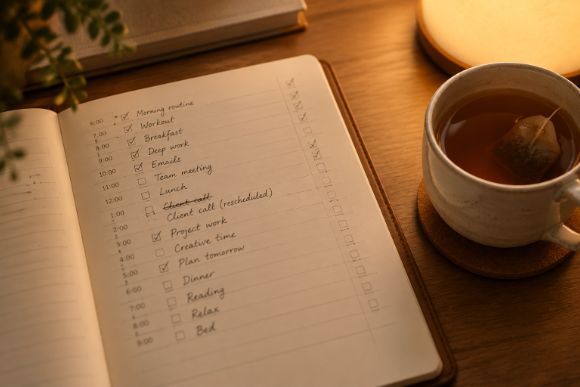
Spend two or three minutes comparing what you actually did against what you’d planned. This quick review is where time blocking really earns its keep over a plain to-do list — over a week or two, you’ll start noticing real patterns in how long things actually take you, which makes tomorrow’s blocks more accurate than today’s.
Use whatever’s left unfinished to set up tomorrow’s blocks, rather than starting the next day’s plan completely from scratch.
Common Beginner Mistakes
- Trying to block the entire day on day one. Start with just a morning or a handful of hours before scaling up to a full day.
- Packing in too many tasks. Most beginner guides suggest capping your first attempts at 3 to 5 key blocks rather than trying to account for every minute.
- Leaving zero buffer time. A schedule with no breathing room falls apart the moment anything runs even slightly long.
- Abandoning the whole system after one bad day. An interrupted or thrown-off schedule doesn’t mean the method failed — just adjust the remaining blocks and keep going.
Ready to Start? Here’s Where to Begin
Once you’ve got a sense of how you want to structure your day, our roundup covers time blocking planners for every style — simple hourly grids, ADHD-friendly systems, and more.
FAQ
How many time blocks should I start with?
Most beginner guides recommend starting small — just 2 to 3 important blocks rather than trying to schedule every minute of the day. You can add more structure once the basic habit feels natural.
Should I time block on paper or digitally?
Either works, and it’s mostly personal preference. Paper feels more deliberate to some people, while a digital calendar makes it easier to move blocks around when the day shifts unexpectedly.
What do I do when something unexpected comes up?
Adjust the remaining blocks for the rest of the day rather than abandoning the plan entirely. This is exactly what buffer time and flex blocks are built to absorb.
Is time blocking the same as the Pomodoro Technique?
No, though they’re related. Time blocking schedules longer, task-specific chunks across your whole day; the Pomodoro Technique uses short, fixed timed sessions (traditionally 25 minutes) with breaks in between, regardless of the specific task.
Final Thoughts
Learning how to time block your day really comes down to a short list: write down everything, estimate honestly, protect your most important work, leave room to breathe, batch the small stuff, and review at the end of the day. Start with just a few blocks rather than the whole day, and let the system grow from there.
You May Also Like
This post contains affiliate links. If you buy through them, we may earn a small commission at no extra cost to you. Learn more.