Debt Snowball vs Debt Avalanche: How to Pick the Method You’ll Actually Stick With
If you’ve got more than one debt, the order you pay them off in actually matters — not just financially, but for whether you stick with the plan at all. The two most common approaches, snowball and avalanche, optimize for two different things, and picking the one that fits your personality matters more than picking the one that wins on a spreadsheet.
Quick navigation
Table of Contents
Debt Snowball vs Debt Avalanche: The Quick Answer
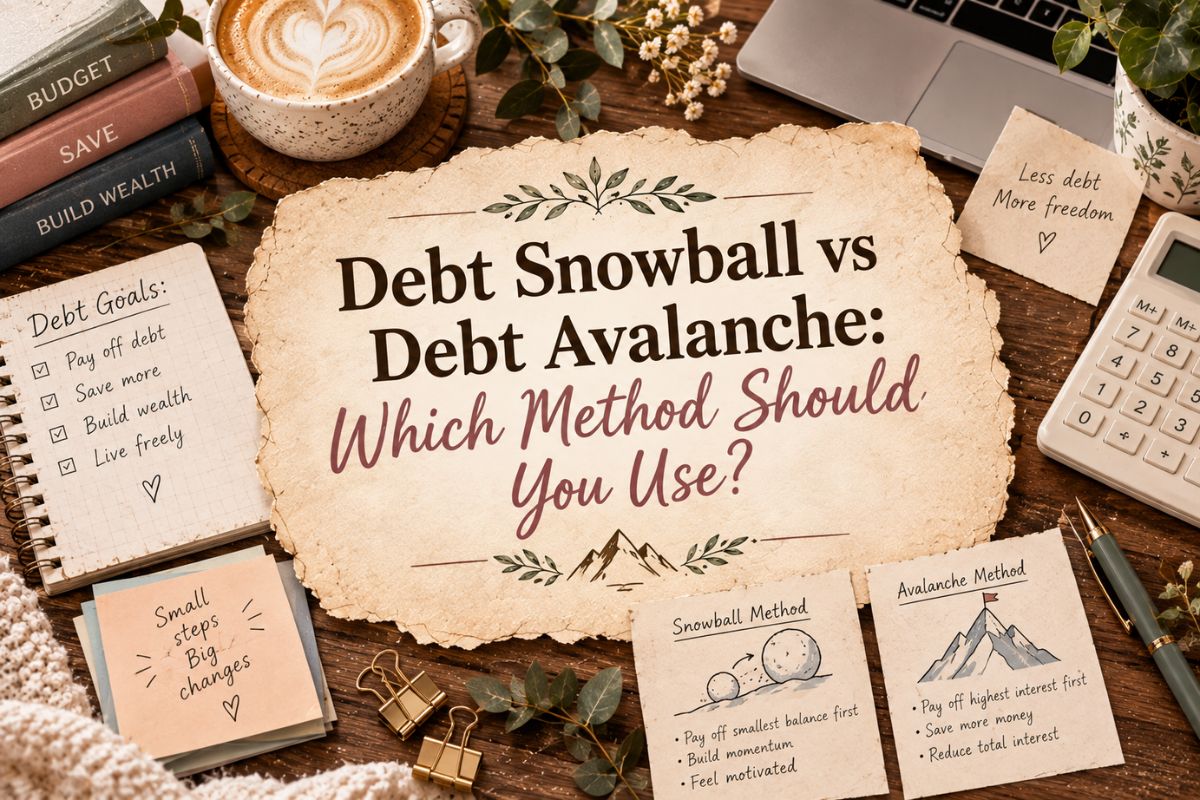
The debt snowball method pays off your smallest balance first, regardless of interest rate, to build momentum through quick wins. The debt avalanche method pays off your highest-interest debt first, which usually saves more money overall but can take longer before you see a debt fully disappear. Snowball is generally better if you need motivation to keep going; avalanche is generally better if you’re disciplined and want to minimize what you pay in interest.
| Debt Snowball | Debt Avalanche | |
|---|---|---|
| Pays off first | Smallest balance | Highest interest rate |
| Best for | Motivation and quick wins | Minimizing total interest paid |
| Downside | May pay more interest overall | Can feel slow if the highest-rate debt is also large |
| Popularized by | Dave Ramsey | Financial planners focused on the math |
What Is the Debt Snowball Method?
The debt snowball method has you list your debts from smallest balance to largest, ignoring interest rates entirely. You make minimum payments on everything except the smallest debt, which gets every extra dollar you can put toward it. Once that one’s paid off, you roll its payment into the next-smallest debt, and so on — like a snowball picking up size as it rolls downhill.
The appeal is almost entirely psychological. Crossing a whole debt off your list, even a small one, provides a real sense of progress that keeps many people motivated through a process that can otherwise feel endless.
An example of what this looks like in practice: the Dave Ramsey Debt Snowball tracker below is built specifically around this method, giving you a structured way to visualize progress as each debt gets knocked out in order.
What Is the Debt Avalanche Method?
The debt avalanche method lists your debts from highest interest rate to lowest, regardless of balance. You put minimum payments toward everything except the highest-rate debt, which gets all your extra money until it’s gone. Then you move to the next-highest rate, repeating until every debt is paid off.
Mathematically, this is the more efficient method — by attacking the debt that’s costing you the most in interest first, you generally pay less overall and can become debt-free sooner in total dollar terms, even if the very first debt takes a while to disappear.
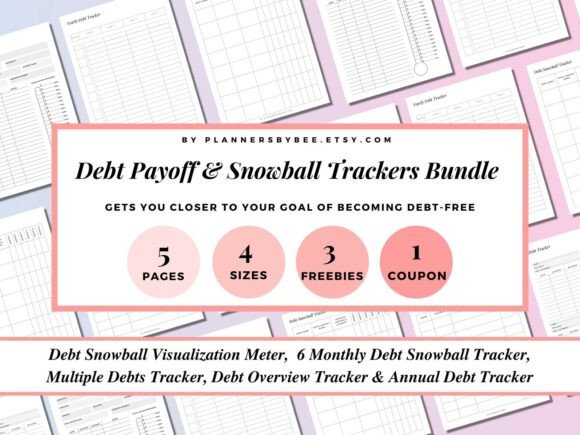
An example of what this looks like in practice: the Debt Payoff Tracker Bundle below covers both snowball and avalanche methods in one workbook, so you can actually run the avalanche numbers before committing to either approach.

Key Differences Between the Two
- Order of attack. One targets the smallest balance first; the other targets the highest interest rate first.
- What you’re optimizing for. One optimizes for motivation and quick wins; the other optimizes for minimizing total interest paid.
- Total cost. The avalanche method usually costs less overall in interest, sometimes significantly, especially with a wide spread in interest rates.
- Time to first win. The snowball method typically gets you a paid-off debt sooner, since it starts with the smallest balance rather than the largest rate.
- Who tends to prefer each. People who’ve struggled to stick with a debt plan before often lean snowball; people who are more numbers-driven and disciplined often lean avalanche.
Which One Is Right for You?
A quick way to tell which one fits how you actually operate:
- Have you started and abandoned a debt payoff plan before? The snowball method’s quick wins tend to hold motivation better over time.
- Do your debts have a wide range of interest rates? The avalanche method will likely save you meaningfully more if one balance carries a much higher rate than the others.
- Are your balances and rates fairly similar across debts? The two methods will produce similar results, so pick whichever order feels more satisfying to work through.
- Do you consider yourself highly disciplined and driven by the math? The avalanche method rewards that mindset directly.
Can You Combine Both Methods?

Not really, at least not in their pure forms — the whole point of each method is the specific order it puts your debts in, and you can’t follow both orders at once for the same extra payment. That said, some people use a hybrid approach: knocking out one or two very small debts first for a quick motivational win, then switching to the avalanche order for the rest to save on interest.
There’s no rule against adjusting your approach partway through if your motivation or your numbers change — the “best” method is ultimately whichever one you’ll actually stick with until the debt is gone.
Ready to Start? Here’s Where to Begin
Whichever method fits you better, our roundup covers trackers built for both approaches, plus bundles that let you compare the two before committing.
FAQ
Which method do financial experts recommend?
Opinions differ. Some, like Dave Ramsey, favor the snowball method for its psychological benefits, while others, including finance writer Ramit Sethi, argue the avalanche method is mathematically the stronger choice since it minimizes total interest paid. Most agree that either is far better than no structured plan at all.
Does the method I choose affect my credit score?
Not directly. Your credit score responds to factors like on-time payments and credit utilization, not which specific order you pay off multiple debts in. Either method, followed consistently, should have a similar positive effect on your score over time.
What if I have debts with the same balance or interest rate?
When two debts are close enough that either order produces a similar result, pick whichever one you’d rather see gone first. The methods only meaningfully diverge when there’s a real gap in balance size or interest rate between your debts.
Can I switch methods partway through paying off debt?
Yes. There’s no penalty for reordering your remaining debts if your circumstances or motivation change. The method is a strategy you’re choosing, not a binding rule.
Final Thoughts
The short version: snowball for momentum, avalanche for the math. Neither is objectively wrong, and the method that actually gets you to zero is the one you’ll stick with long enough to finish — not necessarily the one that wins on paper.
This post contains affiliate links. If you buy through them, we may earn a small commission at no extra cost to you. Learn more.