How to Start Paying Off Debt: 5 Simple Steps to Build a Payoff Plan You Can Stick With
Wanting to be out of debt and knowing how to start paying off debt are two different things. Most guides on the topic land on the same handful of steps, in roughly the same order — and none of them require a finance background to follow.
Quick navigation
Table of Contents
Step 1: List Every Debt You Owe

The real starting point for how to start paying off debt is an honest, complete picture of what you’re actually dealing with. For every debt — credit cards, personal loans, student loans, car loans, medical bills — write down the current balance, the interest rate, the minimum monthly payment, and who you owe it to. If you’re not sure what’s on file, pulling your free credit reports is a reliable way to make sure nothing gets left off the list.
This step trips people up more than any other, mostly because it’s uncomfortable to see the full total in one place. It’s also the step that makes every other step possible, so it’s worth doing properly even if it’s not pleasant.
Step 2: Keep Paying the Minimums on Everything
No matter which payoff method you eventually choose, one rule stays constant: keep making at least the minimum payment on every single debt, every month. Missing a minimum payment on a “lower priority” debt to throw more at another one usually leads to late fees and credit damage that undoes any progress you’re making elsewhere.
Setting up automatic payments for at least the minimums, timed a day or two after payday, is a simple way to make sure this step doesn’t depend on you remembering it every month.
Step 3: Choose a Payoff Method
The next part of how to start paying off debt is deciding where your extra money actually goes once the minimums are covered. The two most common approaches are the debt snowball (smallest balance first, for momentum) and the debt avalanche (highest interest rate first, to minimize what you pay overall). Both work — the right one depends more on your personality than on the math.
We’ve written a full breakdown of how each method works and how to decide between them if you want to go deeper before picking one.
Step 4: Find Extra Money to Put Toward It
A big part of how to start paying off debt faster is simply finding more money to put toward it. Minimum payments alone can take years to clear a balance, especially with interest working against you. A basic budget — even a simple 50/30/20 split between needs, wants, and debt or savings — usually reveals some room to redirect toward extra payments. Beyond trimming discretionary spending, common ways people free up extra cash include picking up freelance or gig work, selling unused items, or putting windfalls like a tax refund or bonus straight toward a balance instead of spending it.
Even a modest amount above the minimum makes a real difference over time, since it goes straight toward the balance rather than mostly covering interest.
Step 5: Track Your Progress
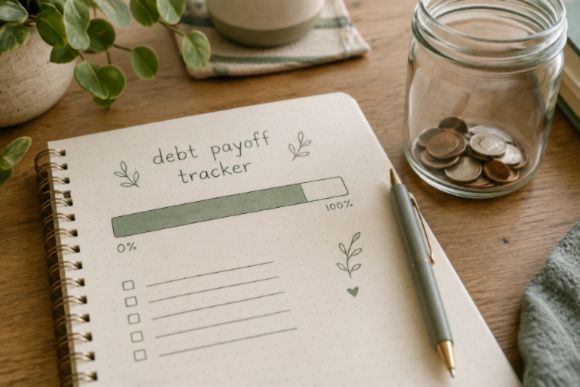
Watching a balance shrink over months, rather than trying to hold the whole picture in your head, is what keeps most people going once the initial motivation fades. A tracker — printable, digital, or a spreadsheet — gives you a place to log each payment and see the debt actually getting smaller, one entry at a time.
This matters more than it might sound like it should. Plenty of well-intentioned debt payoff plans fall apart not because the math was wrong, but because there was no visible sign of progress to hold onto during the slower months.
When to Get Outside Help
If your debt feels unmanageable even after building a plan, or you’re not sure which strategy fits your specific situation, a nonprofit credit counselor can review your budget, debts, and credit report and offer personalized recommendations. This is a normal, sensible step for complicated situations, not a sign the plan has failed — some situations genuinely benefit from a second, professional set of eyes.
Ready to Start? Here’s Where to Begin
Once you’ve worked through how to start paying off debt and have a method in mind, our roundup covers trackers for every approach — snowball-specific formats, spreadsheets, credit card and mortgage-focused trackers, and more.
FAQ
Should I pay off debt or build savings first?
Most guidance suggests building at least a small emergency fund first, even a modest one, so an unexpected expense doesn’t force you back into more debt. After that, many people split extra money between debt payoff and continuing to save, rather than choosing one exclusively.
Will paying off debt hurt my credit score?
Generally no — paying down balances typically helps your score over time by lowering your credit utilization. Closing an account entirely after paying it off can occasionally have a small, temporary effect, but the overall trend from reducing debt is positive.
How long does it usually take to pay off debt?
It depends entirely on the total amount, interest rates, and how much extra you can put toward it each month, so there’s no universal timeline. Some people clear smaller balances in months; larger or higher-interest debt can reasonably take a few years.
What if I can’t even cover the minimum payments?
This is exactly the situation a nonprofit credit counselor is built to help with — they can talk to creditors on your behalf and may be able to negotiate a more manageable repayment plan. It’s worth reaching out sooner rather than later rather than letting missed payments pile up.
Final Thoughts
If you’ve been putting off figuring out how to start paying off debt, it really does come down to a short list of unglamorous steps: know exactly what you owe, keep the minimums covered, pick a method and stick with it, find a little extra where you can, and track it so the progress feels real. None of it requires a finance degree — just a plan and the willingness to actually start it.
This post contains affiliate links. If you buy through them, we may earn a small commission at no extra cost to you. Learn more.