How to Start a Budget Planner: 5 Beginner Steps to Finally See Where Your Money Goes
Most people already sense they should be budgeting. What tends to stop them isn’t a lack of motivation — it’s not knowing how to start a budget planner in the first place. The good news is that budgeting for the first time is far less complicated than it sounds, and most beginners can rough out a working budget in well under an hour.
Quick navigation
Table of Contents
What Is a Budget Planner?
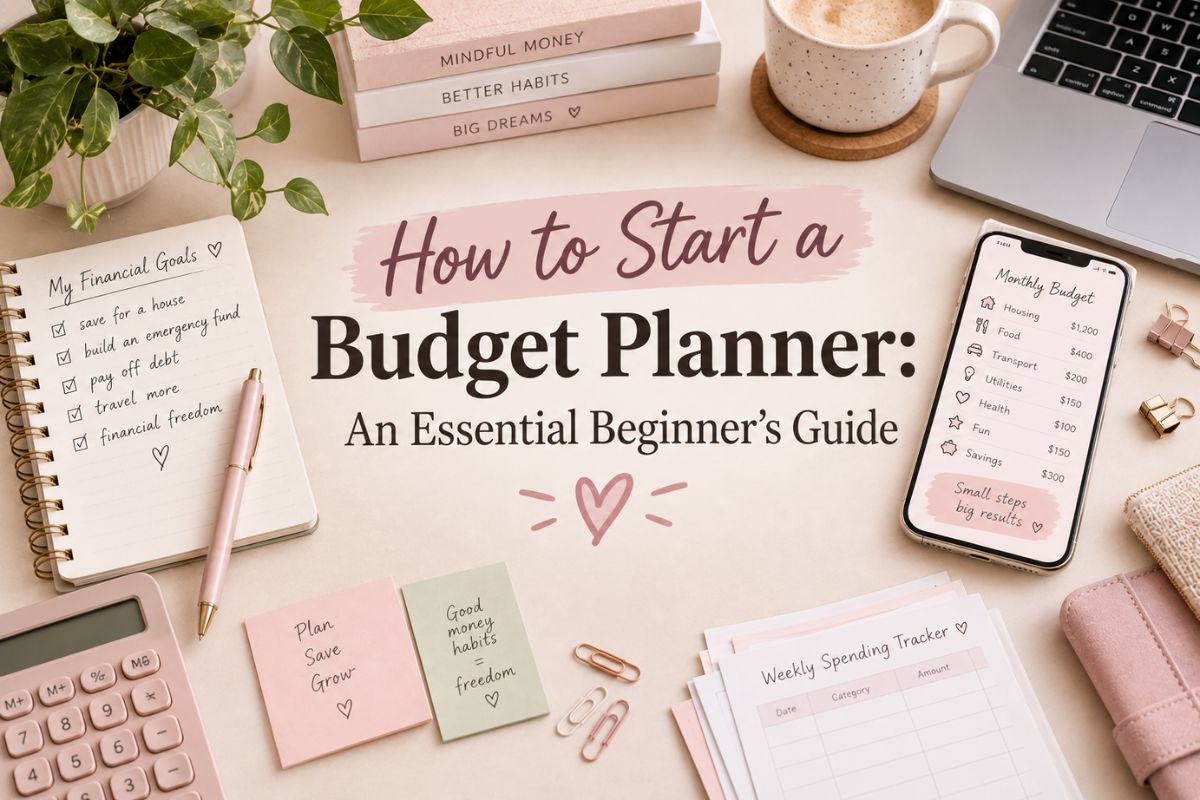
The first thing to understand about how to start a budget planner is what it actually is: a structured tool — printable, digital, or app-based — that walks you through tracking income and expenses rather than leaving you to build a system from scratch. As one budgeting guide puts it, the trick is finding a way to track your finances that actually works for you. Unlike a plain notebook or blank spreadsheet, it usually comes with categories, monthly pages, and space for goals already laid out, so you’re filling in numbers rather than designing a format first.
At its core, a budget is simply income minus expenses, with whatever’s left assigned a purpose — savings, debt payoff, or spending you’ve actually decided on rather than money that quietly disappears.
Step 1: Calculate Your Take-Home Income
Start with your net income — what actually lands in your account after taxes and deductions — rather than your gross salary. Using gross pay tends to make a budget feel more generous than it actually is, since money for taxes, retirement contributions, or health insurance was never really available to spend in the first place.
If your income varies month to month, use a conservative average based on your lowest recent months rather than your best one, so the budget still holds up during a leaner stretch.
Step 2: List Your Expenses
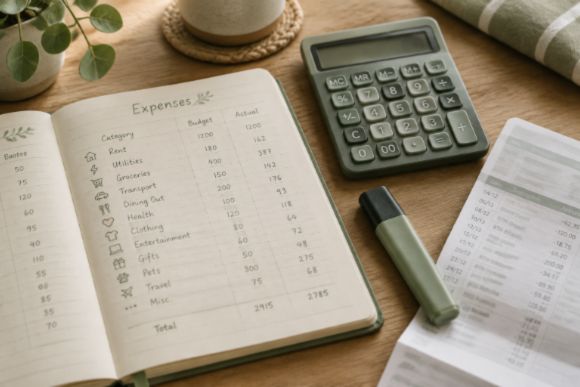
Pull up a bank or credit card statement from the last month and go through it honestly — this is usually the step that reveals the most, since few people track spending closely enough to know exactly where it goes. Group what you find into fixed expenses (rent, insurance, subscriptions) and variable ones (groceries, gas, entertainment), since they behave differently in a budget.
It’s common to be surprised by this step, in either direction — a subscription you forgot about, or spending that turns out lower than you assumed. Either way, the goal here is an accurate picture, not a flattering one.
Step 3: Choose a Budgeting Method
A few well-known approaches make the next steps easier rather than starting from a blank framework:
- The 50/30/20 rule. Roughly 50% of income to needs, 30% to wants, 20% to savings or debt payoff — a simple starting split for beginners.
- The envelope method. A set amount assigned to each category, physically or digitally, that you stop spending from once it’s empty.
- Zero-based budgeting. Every dollar of income is assigned a specific job — spending, saving, or debt — until nothing is left unaccounted for.
None of these is objectively correct — the right one is whichever structure you’ll actually keep using past the first month.
Step 4: Set Up Your Categories
Take the expenses you listed in Step 2 and group them into categories that match your chosen method — housing, groceries, transportation, debt payments, savings, and a reasonable amount for discretionary spending. Most budget planners come with these categories already built in, which is largely the point of using one instead of a blank page.
Set a specific amount for each category based on your actual spending history, rather than an aspirational number you hope to hit — a budget built on wishful thinking tends to fall apart within the first few weeks.
Step 5: Track and Review Weekly
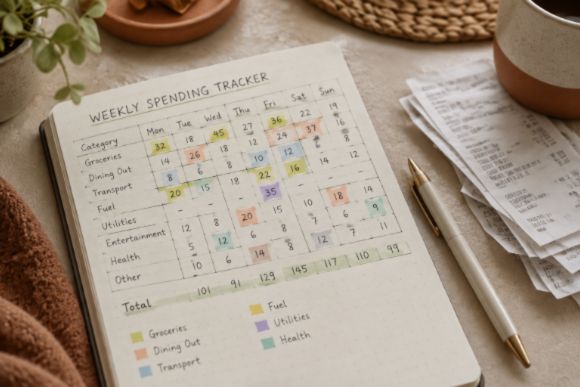
A budget only works if you actually check it against what you’re spending, and weekly tends to be frequent enough to catch a category running over before it’s too late to adjust. Keeping receipts, photographing them, or reviewing your bank statement are all reasonable ways to stay on top of it — the specific method matters less than doing it consistently.
Expect to adjust your categories after the first month or two. A first budget is a draft, not a permanent contract, and it’s normal to need to shift numbers around once you see how the categories actually hold up against real spending.
Common Mistakes Beginners Make
- Budgeting off gross income instead of take-home pay. This makes every category look more affordable than it actually is.
- Setting unrealistically strict categories. A budget that assumes you’ll suddenly stop spending on things you actually value usually gets abandoned within weeks.
- Treating the first draft as final. Expecting to get every category right on the first try sets up disappointment that isn’t really warranted.
- Giving up after one overspent category. One category running over doesn’t mean the whole system has failed — it usually just means that number needs adjusting.
Ready to Start? Here’s Where to Begin
Once you’ve got a method in mind, our roundup covers budget planners for every style — simple monthly layouts, full financial systems, and everything in between.
FAQ
Should I use my gross income or take-home income?
Always take-home income. Gross pay includes money that’s already spoken for — taxes, retirement contributions, insurance — so budgeting from it overstates what you actually have available to allocate.
What if my income changes every month?
Base your budget on a conservative estimate — your lowest typical month rather than your average or best one. Any income above that becomes a bonus toward savings or debt rather than something you’ve already counted on spending.
What if there’s nothing left over after expenses?
That’s genuinely useful information rather than a failure — it means you can see exactly where the gap is instead of it staying a mystery. From there, the next step is usually looking at variable expenses first, since fixed costs are typically harder to adjust quickly.
How long before budgeting starts to feel easier?
Most people describe a real shift after a couple of months, once checking the budget starts to feel like a normal habit rather than an extra chore. The anxiety around not knowing where money is going tends to fade well before the categories themselves feel perfectly dialed in.
Final Thoughts
If you’ve been putting off learning how to start a budget planner, the truth is a first budget doesn’t need to be perfect — it needs to exist. Calculate what actually comes in, be honest about what goes out, pick a method, and expect to adjust it after the first month. The goal isn’t restriction; it’s finally being able to see where your money is going instead of wondering.
You May Also Like
This post contains affiliate links. If you buy through them, we may earn a small commission at no extra cost to you. Learn more.